Goal of the game
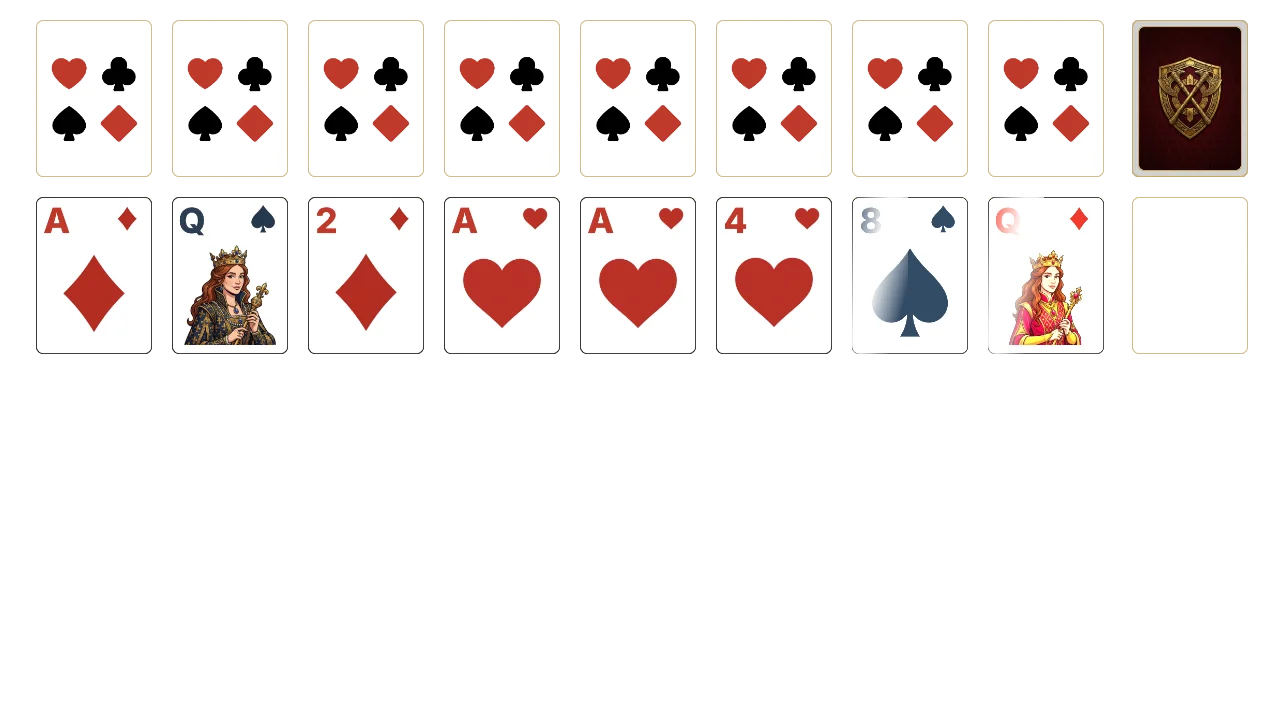
Move all 104 cards (two complete decks) onto the eight foundations, in ascending order and by suit (Spades on Spades, Hearts on Hearts, Diamonds on Diamonds, Clubs on Clubs), from Ace to King. The game is won when each foundation holds all 13 cards of its suit, twice — eight foundations × 13 cards = 104 cards total.
Setup
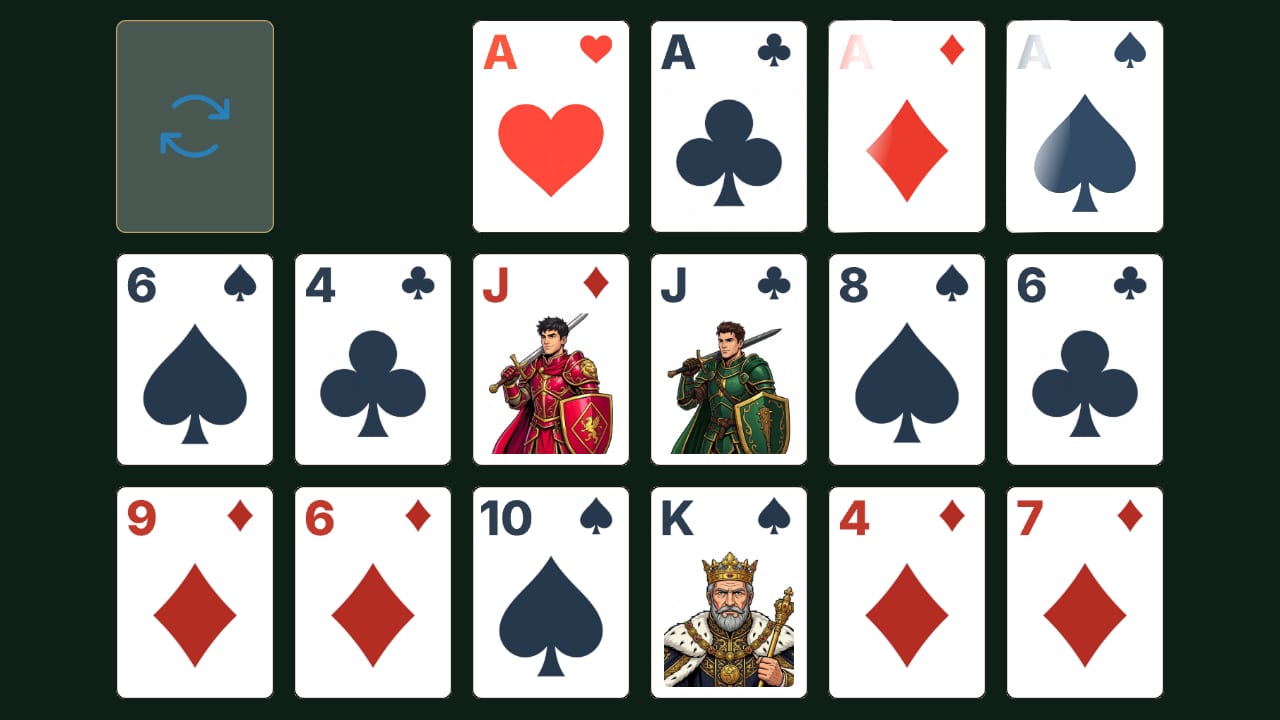
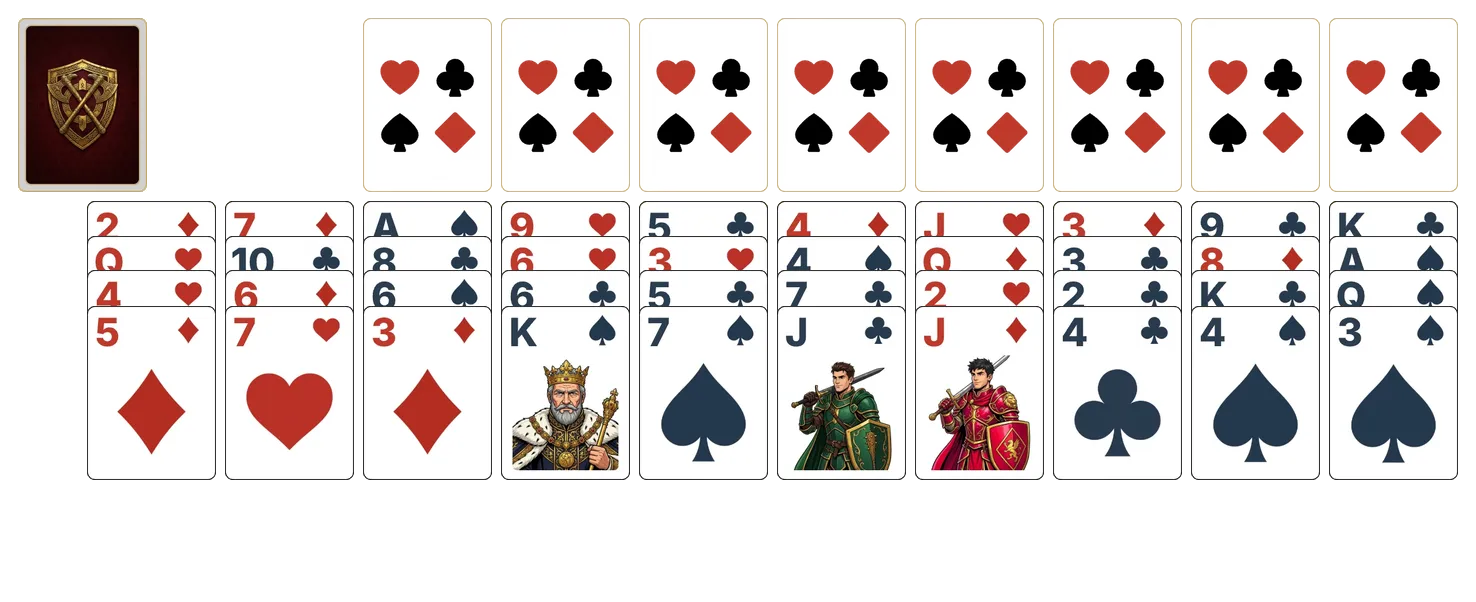
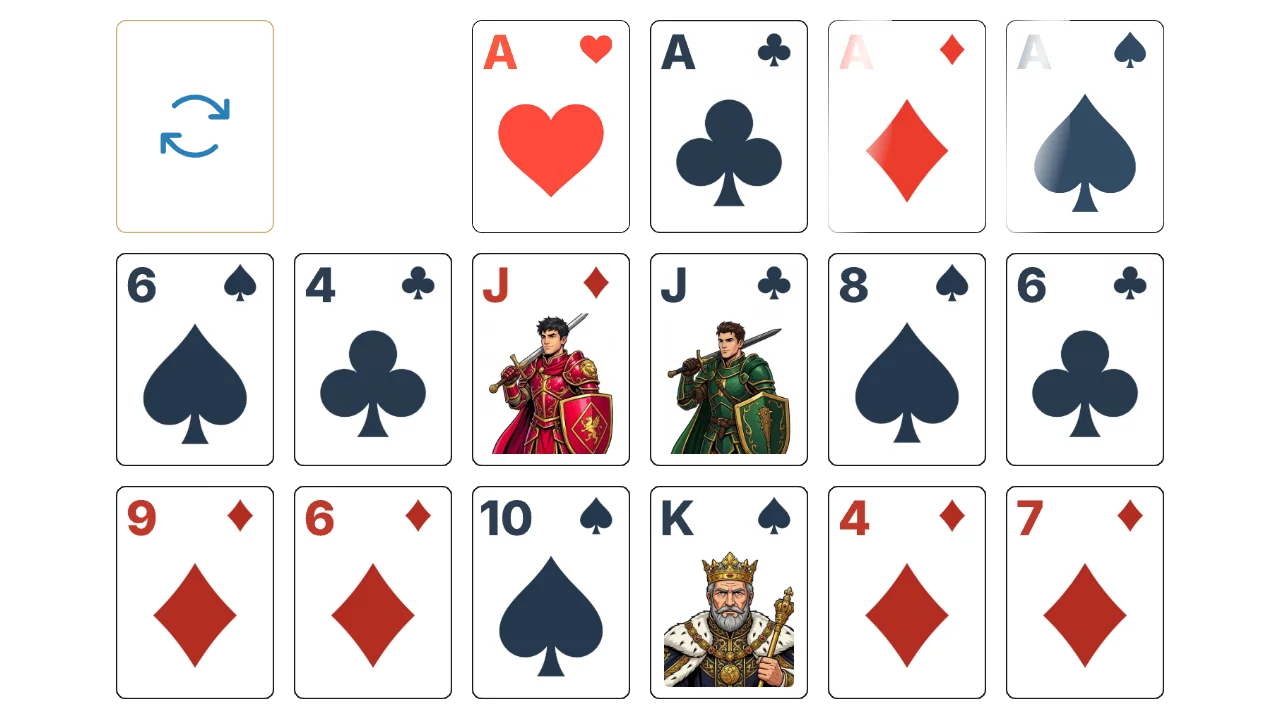
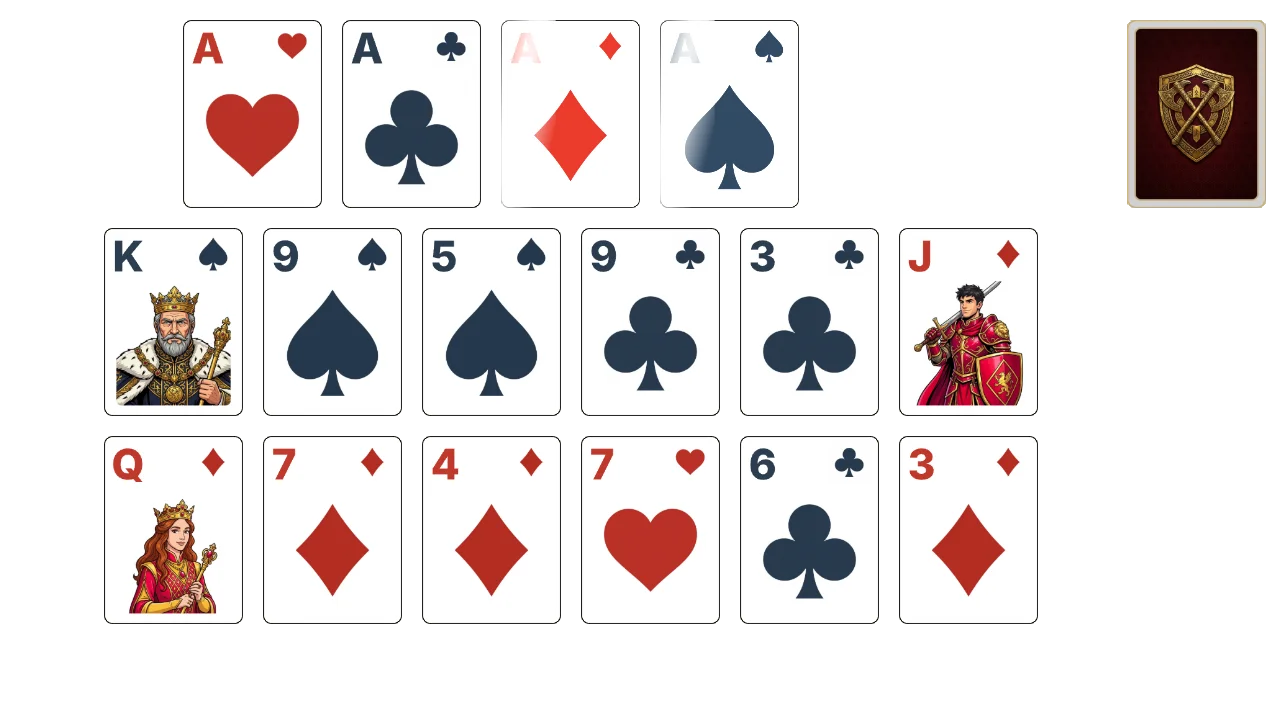
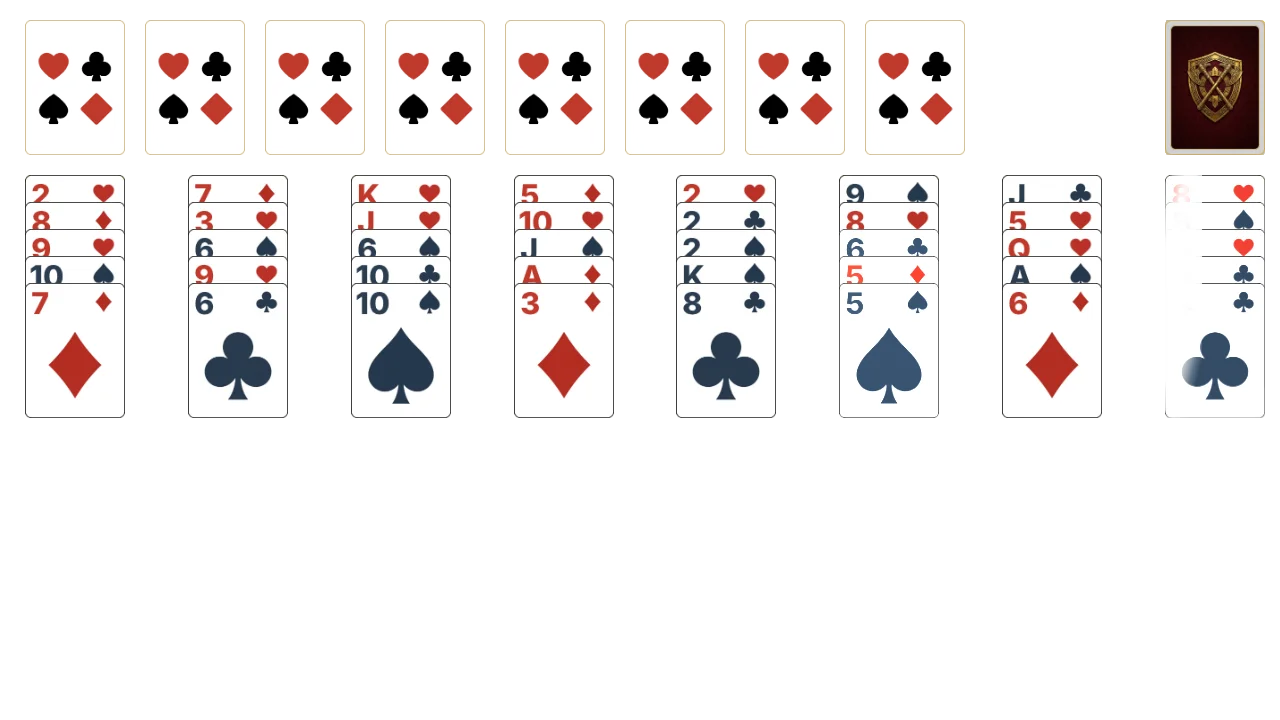
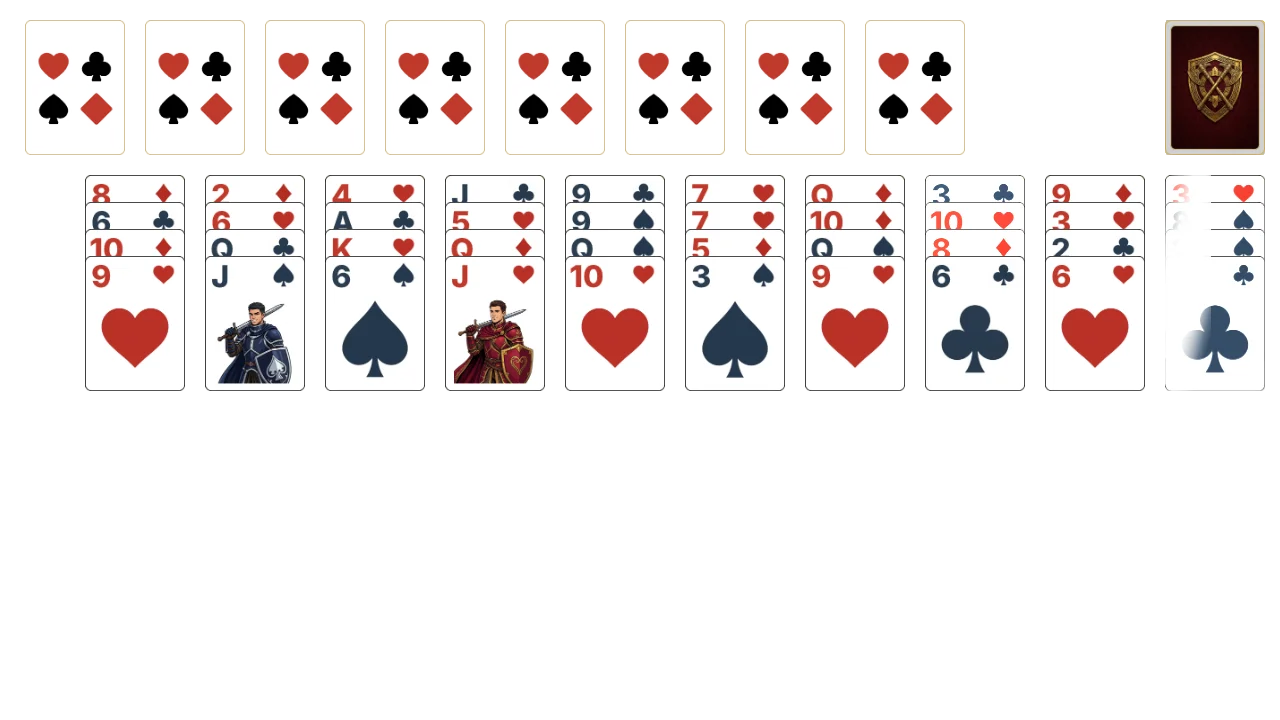
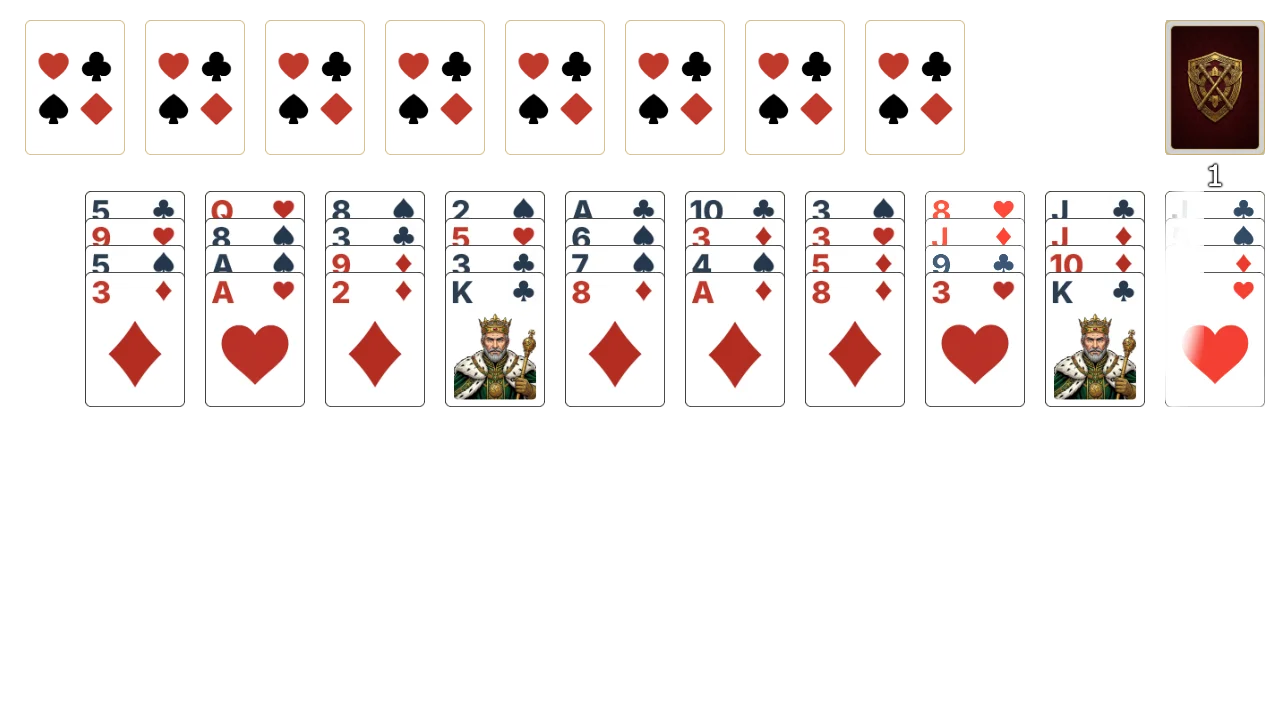
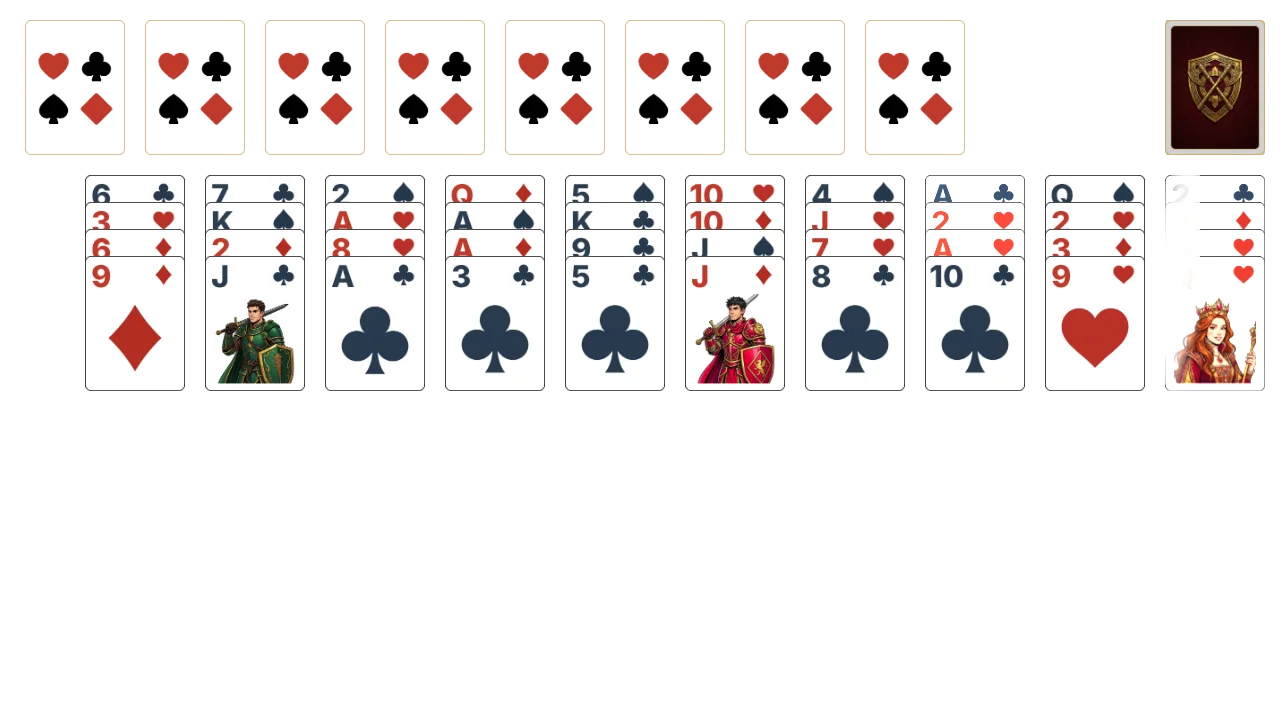
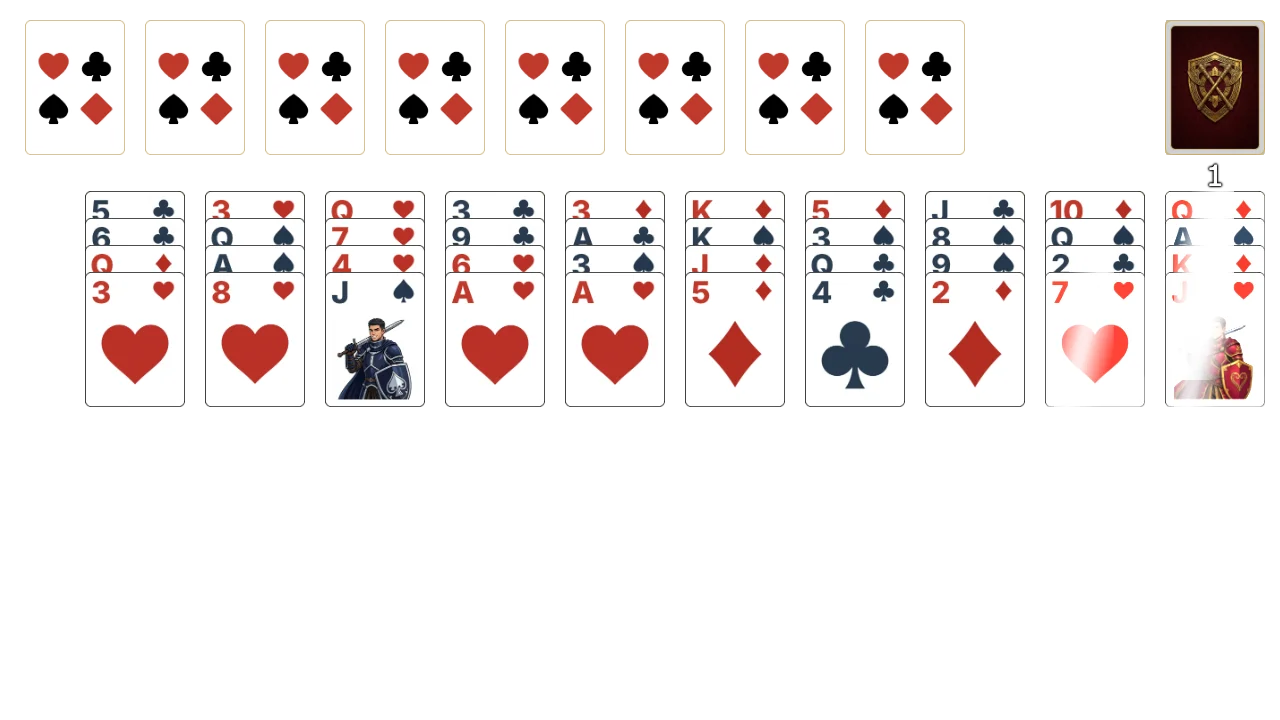
Shuffle two standard 52-card decks together (104 cards). Deal them face-up into ten tableau columns of four cards each (40 cards total). The remaining 64 cards form the stock pile, dealt face-up onto a single waste pile one card at a time. Place the eight foundations above the tableau — empty at the start, one for each suit of each deck — and start building them as Aces appear.
Reglas del Forty Thieves
- Dos barajas (104 cartas) se reparten en 10 columnas de 4 cartas cada una, todas boca arriba.
- Construye el tableau en orden descendente por palo (tréboles sobre tréboles, corazones sobre corazones…).
- Solo puedes mover una carta a la vez, sin movimientos de grupo.
- Construye 8 pilas base en orden ascendente por palo, de As a Rey.
- Las cartas del mazo salen de una en una, sin posibilidad de redistribuir.
Win and loss conditions
You win when all 104 cards have been built onto the eight foundations and the tableau, stock, and waste are empty. You lose when the stock is exhausted, the top of the waste cannot be placed anywhere, and no legal move advances any foundation. Solitaire Royal's undo button lets you backtrack costly moves; you can also restart the deal or shuffle a new one. Deals are randomly shuffled and tuned to be solvable.
Estrategia y consejos
- Las columnas vacías son muy valiosas; necesitarás al menos una para poder reordenar de forma compleja.
- No entierres valores bajos. Un 3 atrapado bajo 8 cartas suele significar partida perdida.
- Prueba primero las variantes Relaxed si el Forty Thieves clásico se te hace muy duro.
Forty Thieves is widely associated with Napoleon Bonaparte, who is reputed to have played it during his exile on Saint Helena (1815-1821) — the name's connection to the "Ali Baba and the Forty Thieves" tale dates from the same era's European fascination with Arabian Nights. The strict ruleset became a benchmark for difficulty in 19th-century patience anthologies, and by the 20th century had spawned a recognised family of relaxations (Josephine, Miss Milligan, Forty and Eight, Streets and Alleys, Lucas, Maria) that systematically soften one constraint at a time while preserving the core two-deck same-suit-only structure.