Goal of the game
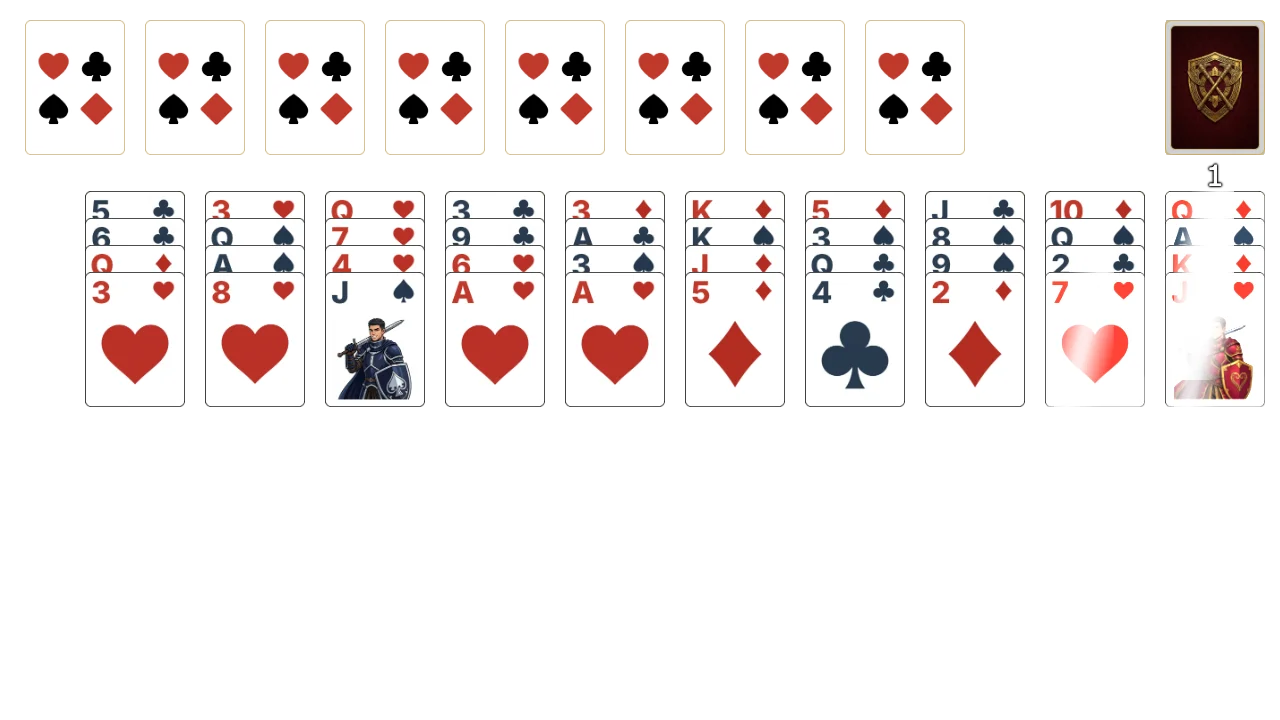
Move all 104 cards (two complete decks) onto the eight foundations, in ascending order and by suit (Spades on Spades, Hearts on Hearts, Diamonds on Diamonds, Clubs on Clubs), from Ace to King. The game is won when each foundation holds all 13 cards of its suit, twice — eight foundations × 13 cards = 104 cards total.
Setup
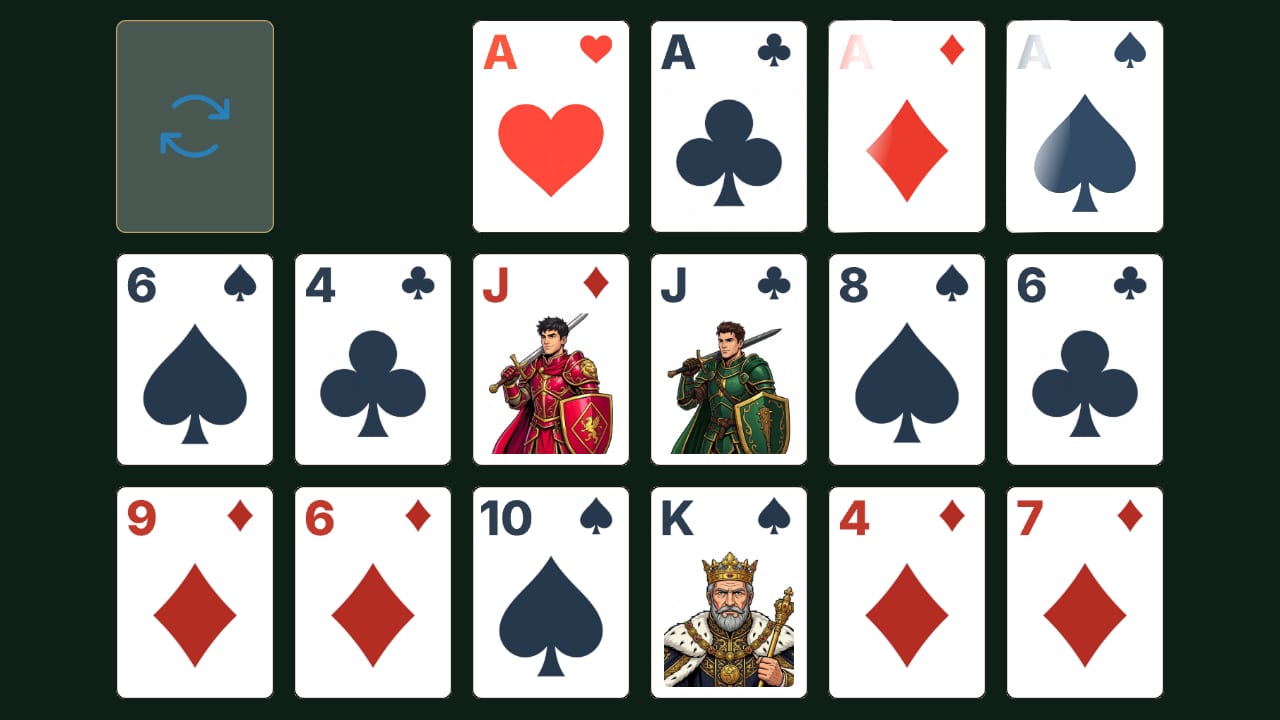
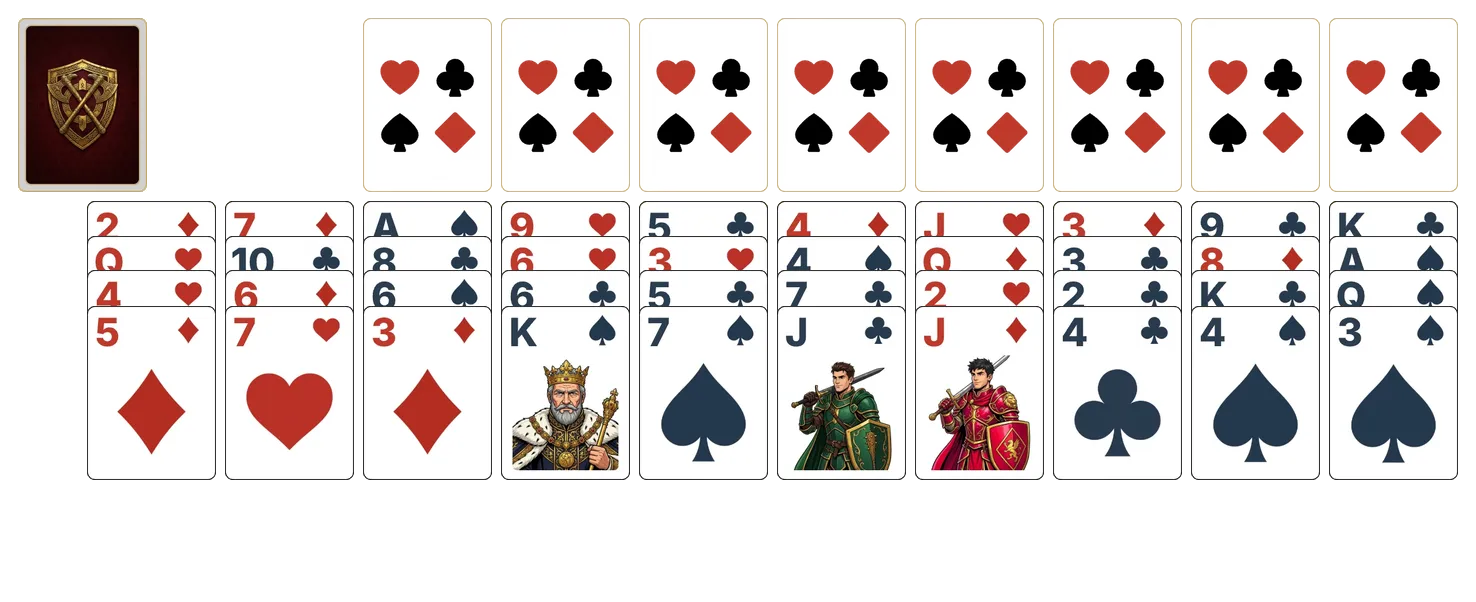
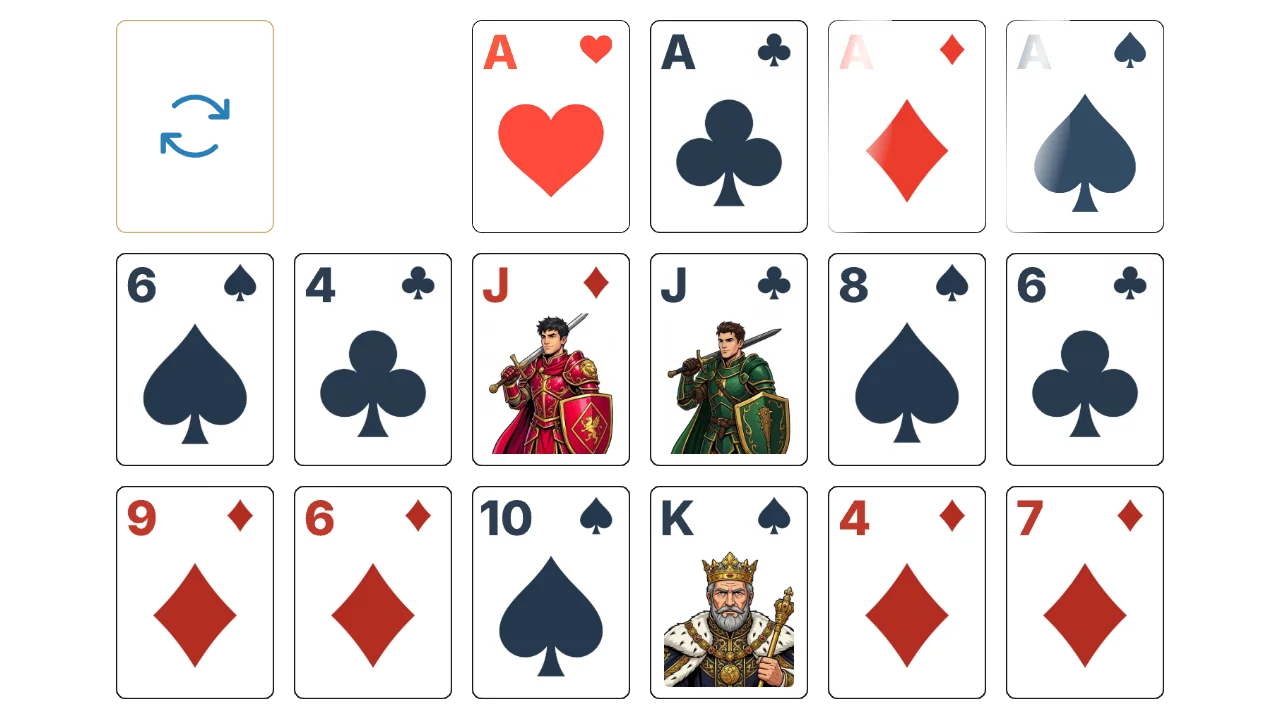
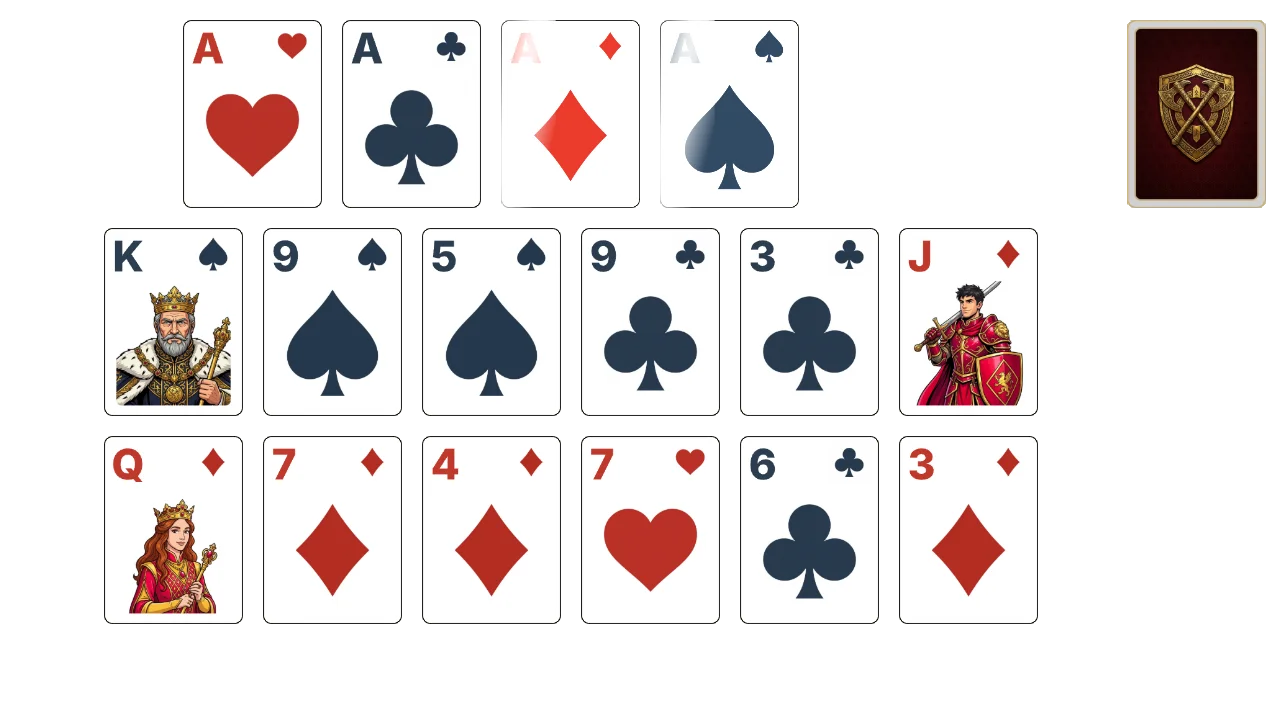
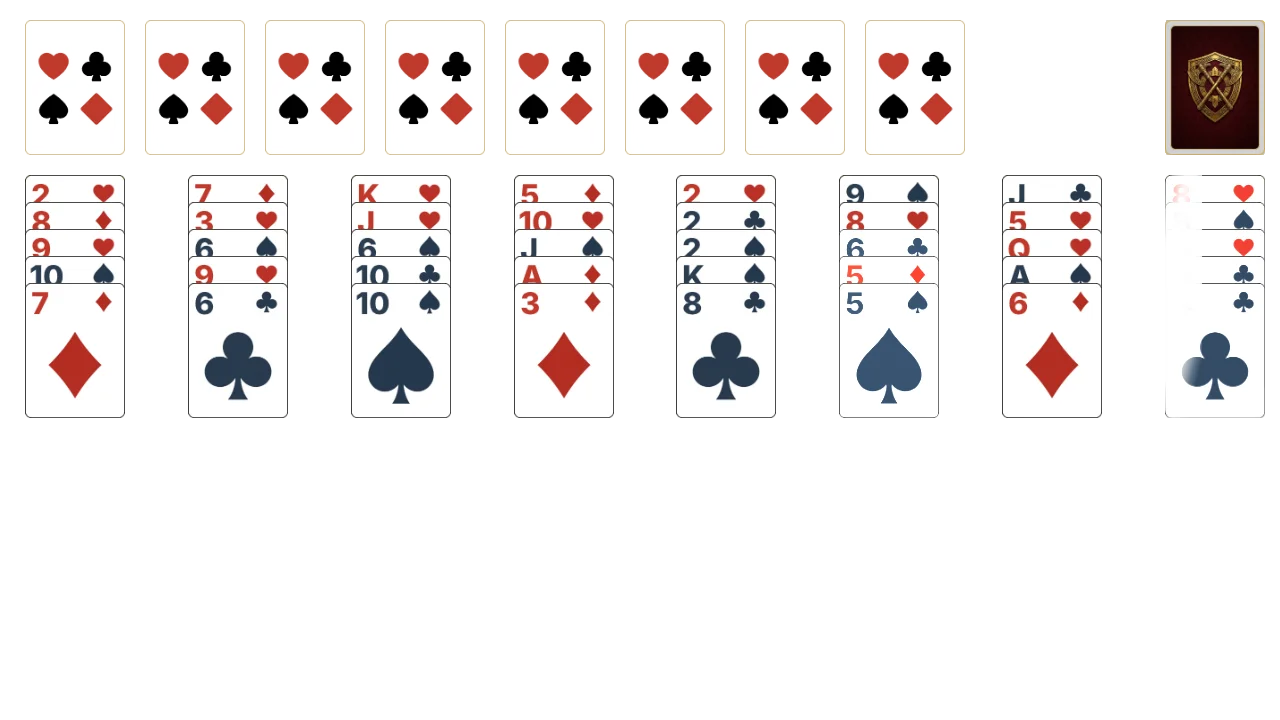
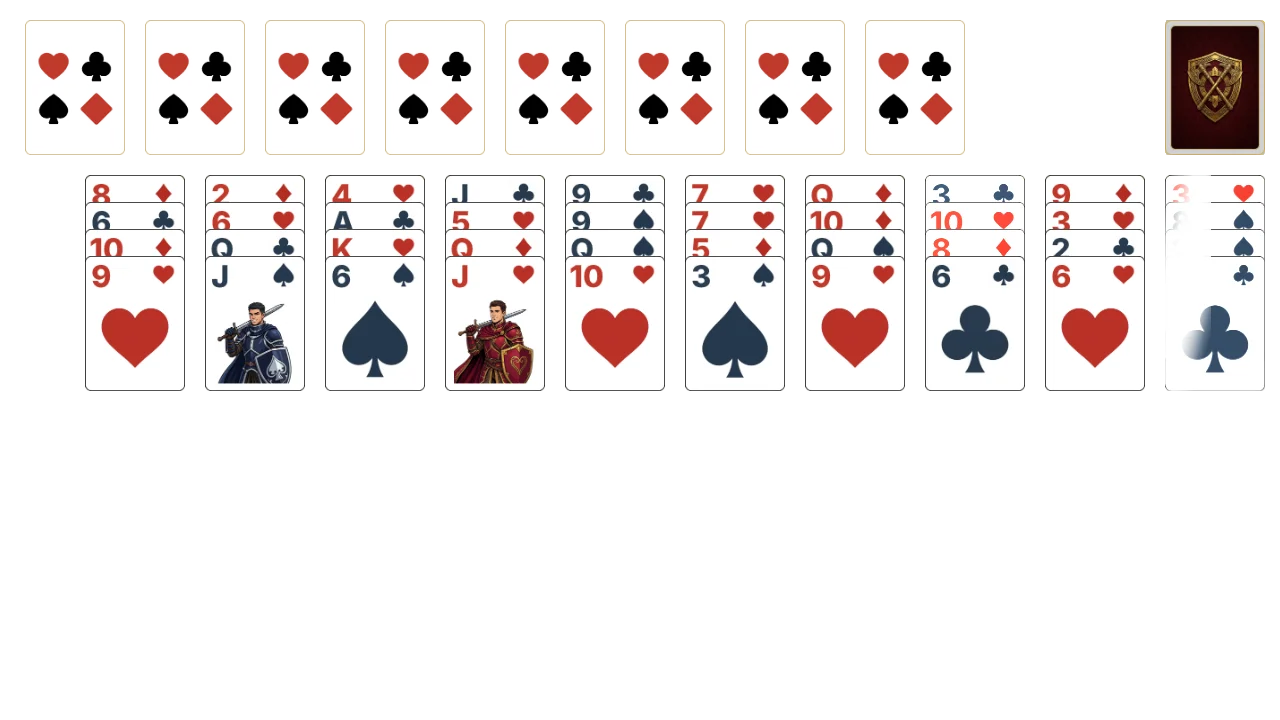
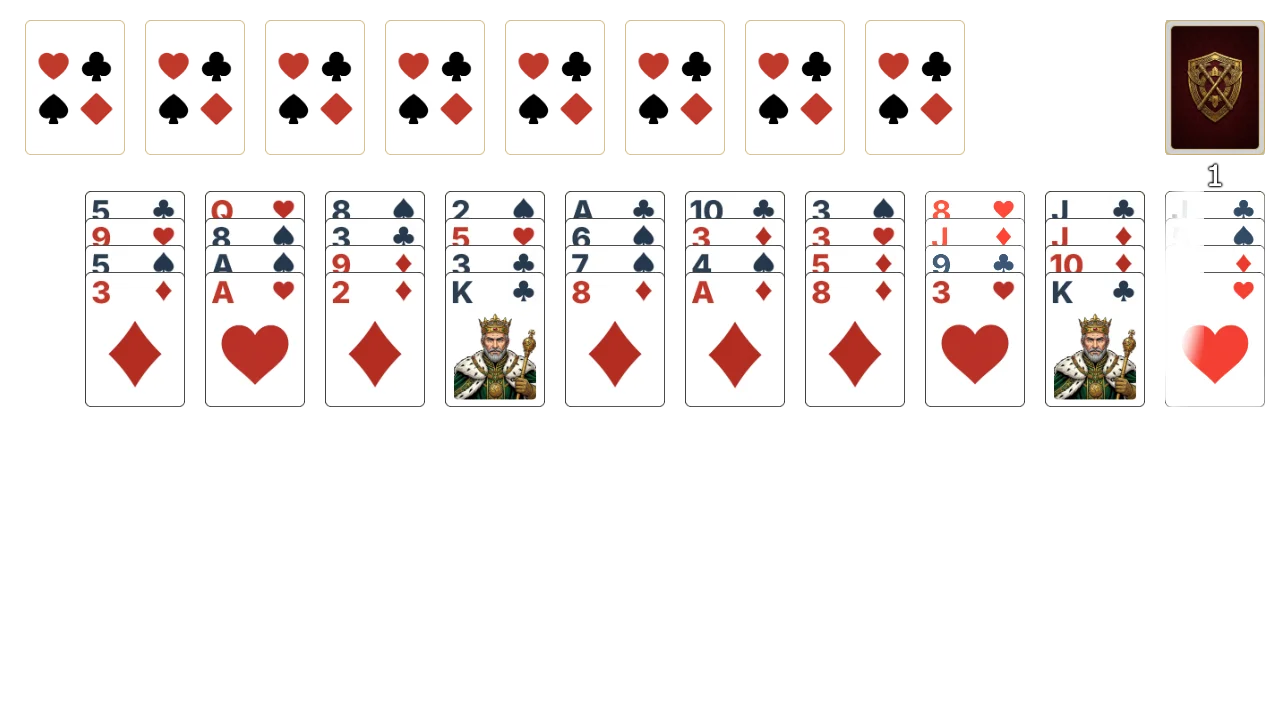
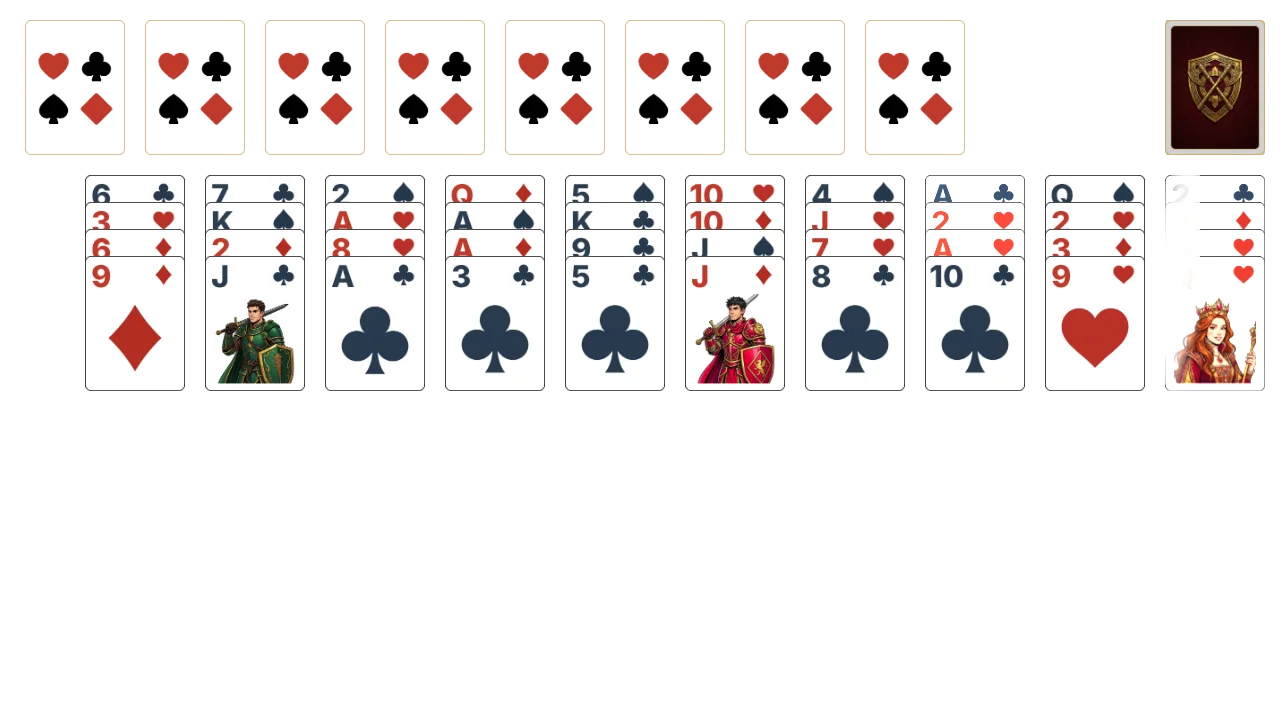
Shuffle two standard 52-card decks together (104 cards). Deal them face-up into ten tableau columns of four cards each (40 cards total). The remaining 64 cards form the stock pile, dealt face-up onto a single waste pile one card at a time. Place the eight foundations above the tableau — empty at the start, one for each suit of each deck — and start building them as Aces appear.
How to play Forty Thieves
- Build the tableau columns down by same suit — Spades on Spades, Hearts on Hearts, Diamonds on Diamonds, Clubs on Clubs. No alternating colours; the suit must match exactly. This is the rule that makes Forty Thieves famously demanding.
- Move only one card at a time between tableau columns. Even if you have a perfectly sequenced same-suit run on top of one column, you can only move them one card per turn. No group moves of any kind in the classic version.
- Foundations build up by same suit (Spades on Spades, etc.), from Ace to King. You can promote any available top-of-column or top-of-waste card to a foundation — but you can never pull a card back from a foundation in classic Forty Thieves.
- The stock pile turns one card at a time onto a face-up waste pile. The top of the waste is always playable to foundations or to a matching tableau column. There are no redeals — once the stock is exhausted, it's gone.
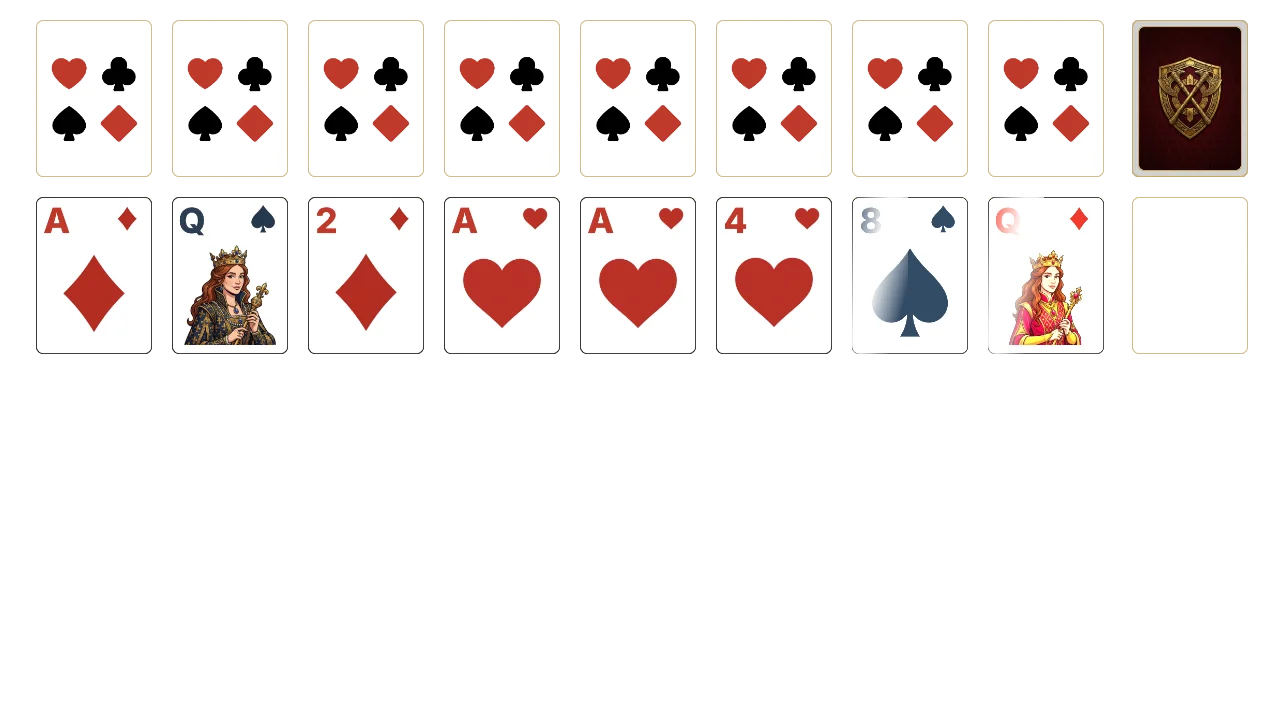
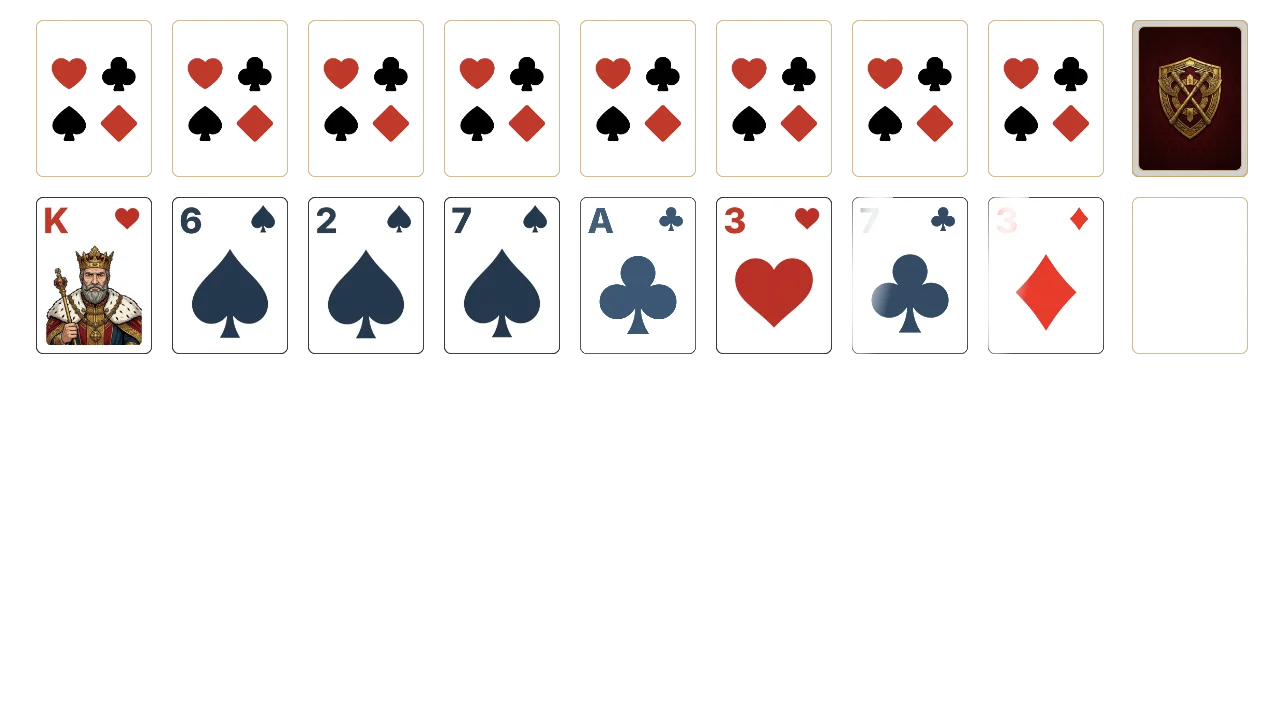
- Empty tableau columns accept any single card (from another column, the waste, or the stock). Empty columns are the most valuable resource in the game, since the one-card-move rule makes them your only practical buffer for complex re-orderings.
Win and loss conditions
You win when all 104 cards have been built onto the eight foundations and the tableau, stock, and waste are empty. You lose when the stock is exhausted, the top of the waste cannot be placed anywhere, and no legal move advances any foundation. Solitaire Royal's undo button lets you backtrack costly moves; you can also restart the deal or shuffle a new one. Deals are randomly shuffled and tuned to be solvable.
Strategy & tips
- Empty columns are everything. With no group moves and no redeals, an empty column is your only real maneuvering tool. Don't fill it with a King unless that King opens a long playable suite or unblocks a critical buried card.
- Don't bury low ranks. A 3♠ trapped under 8 cards is often a lost game, because the 4♠ can't reach the foundation until the 3♠ is dug out — and digging requires moves you can't afford. Promote Aces and 2s relentlessly when available.
- Watch the stock. The stock is dealt once with no redeal — every card that goes to the waste must either play immediately or be playable when uncovered. Track which Aces and 2s remain so you don't accidentally bury them.
- Don't promote middle ranks too eagerly. A 7♠ on the foundation might lock out a 6♠ that the next-deck 7♠ would have used as a bridge. Forty Thieves has 8 cards per rank per suit — promotion order matters more than in single-deck games.
- Try Josephine or Forty and Eight first. The Forty Thieves family has many named relaxations: Josephine allows group moves of properly sequenced cards, Forty and Eight adds a redeal, Miss Milligan changes tableau geometry. Pick the relaxation that fits how you want to learn, then graduate to classic.
Forty Thieves is widely associated with Napoleon Bonaparte, who is reputed to have played it during his exile on Saint Helena (1815-1821) — the name's connection to the "Ali Baba and the Forty Thieves" tale dates from the same era's European fascination with Arabian Nights. The strict ruleset became a benchmark for difficulty in 19th-century patience anthologies, and by the 20th century had spawned a recognised family of relaxations (Josephine, Miss Milligan, Forty and Eight, Streets and Alleys, Lucas, Maria) that systematically soften one constraint at a time while preserving the core two-deck same-suit-only structure.