Goal of the game
Move all 52 cards onto the four foundations, in ascending order and by suit (Spades on Spades, Hearts on Hearts, Diamonds on Diamonds, Clubs on Clubs), from Ace to King. The game is won the moment each foundation holds the 13 cards of its suit.
Setup
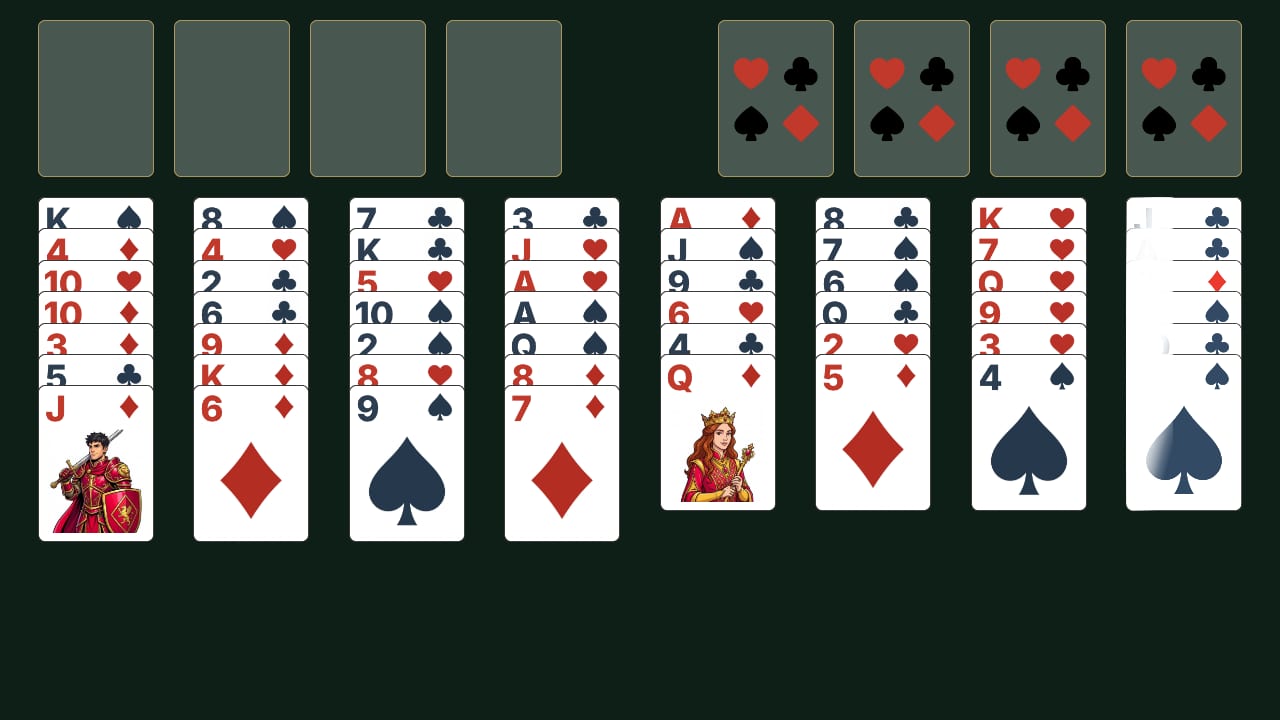
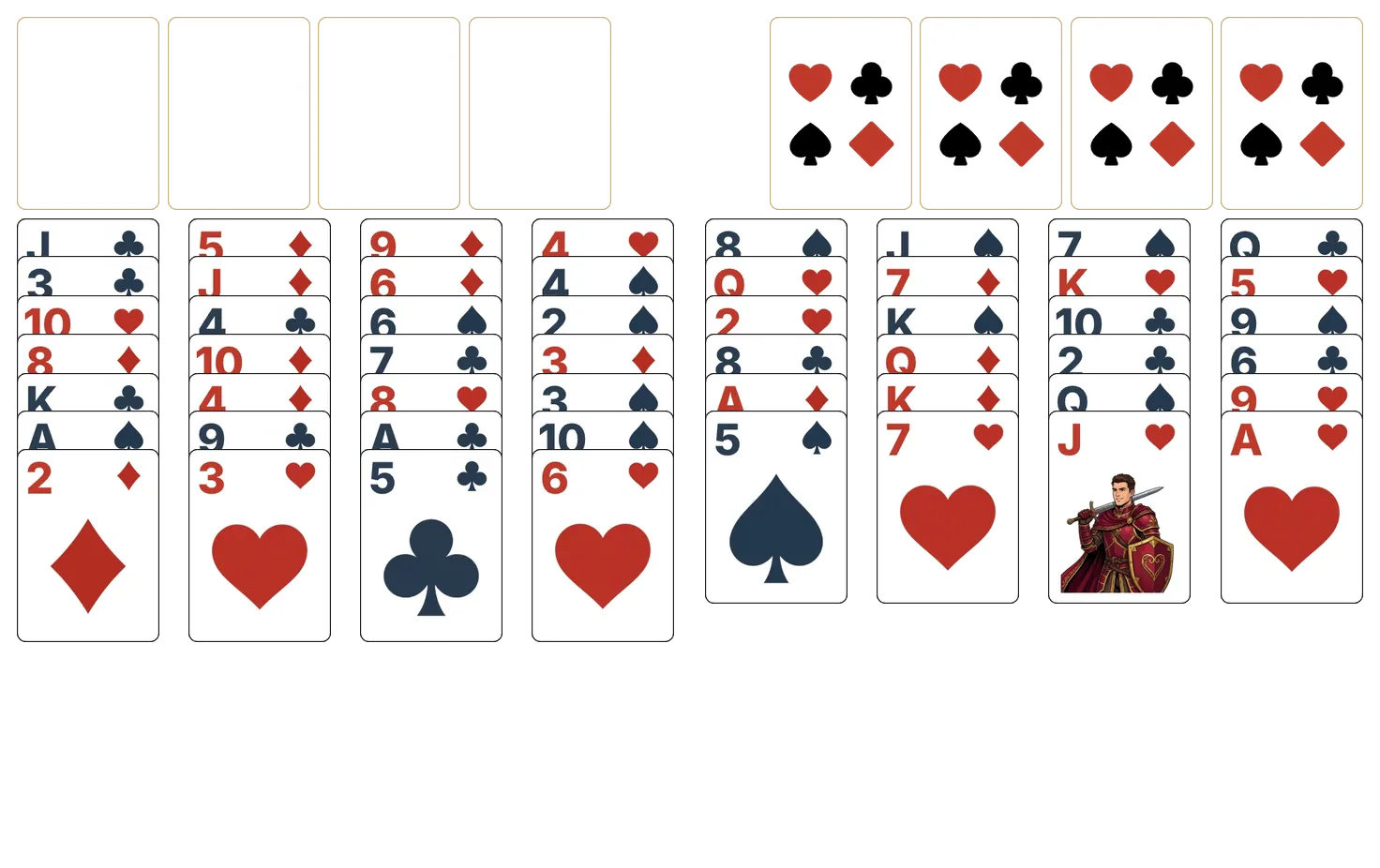
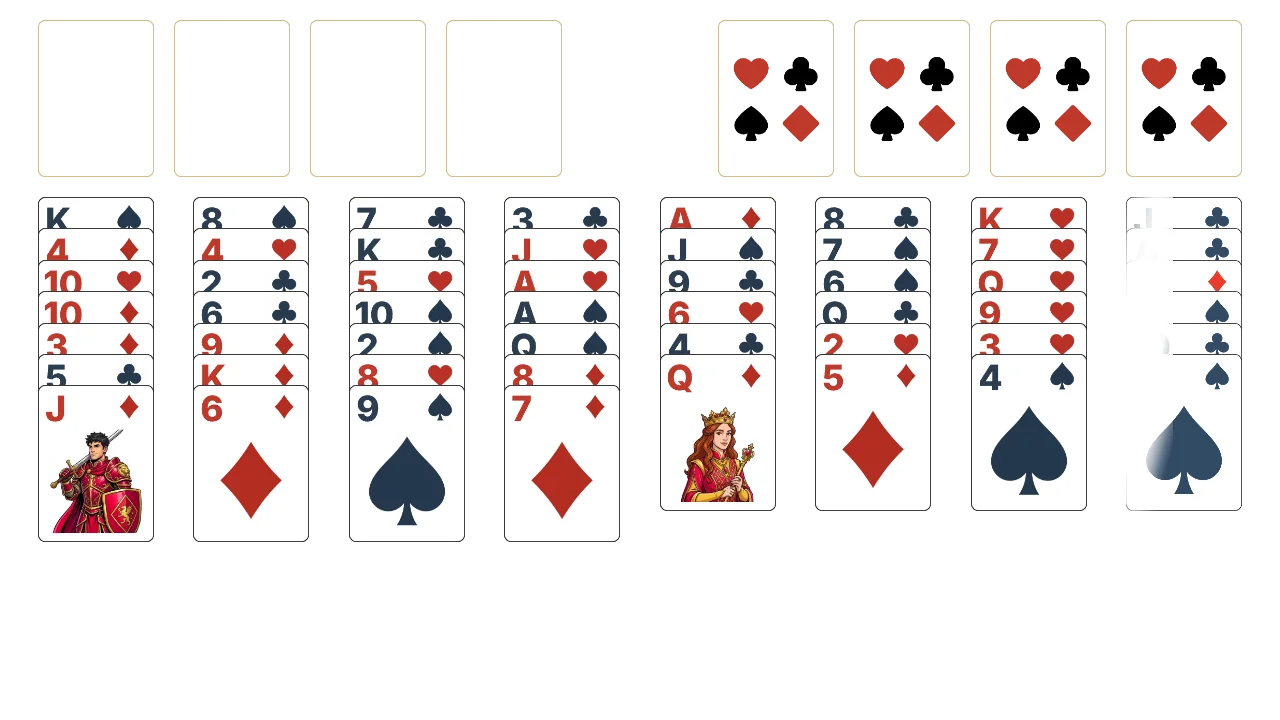
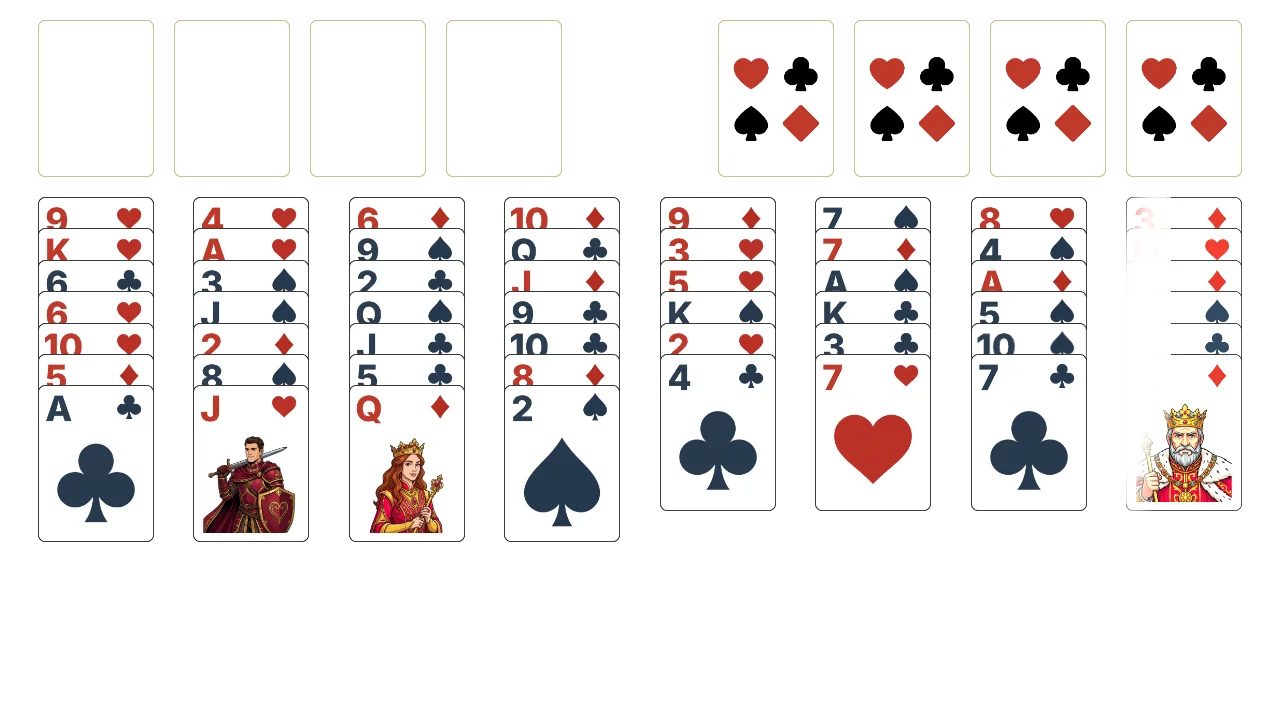
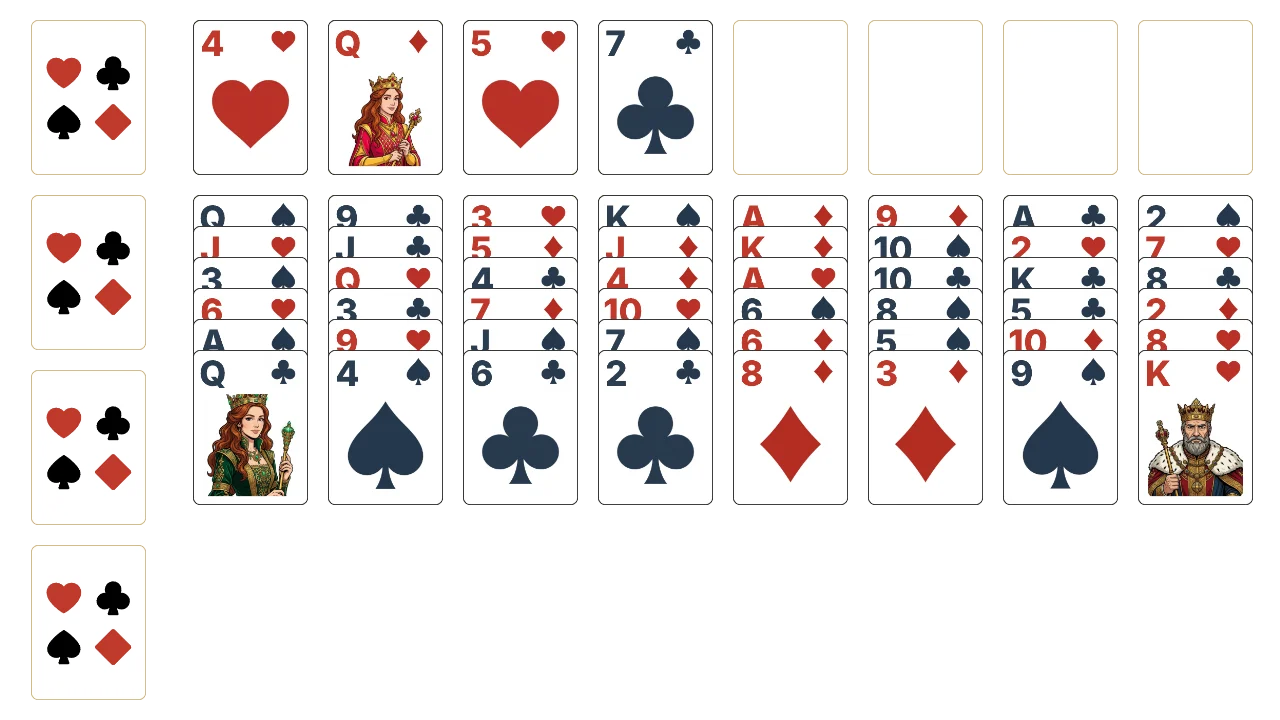
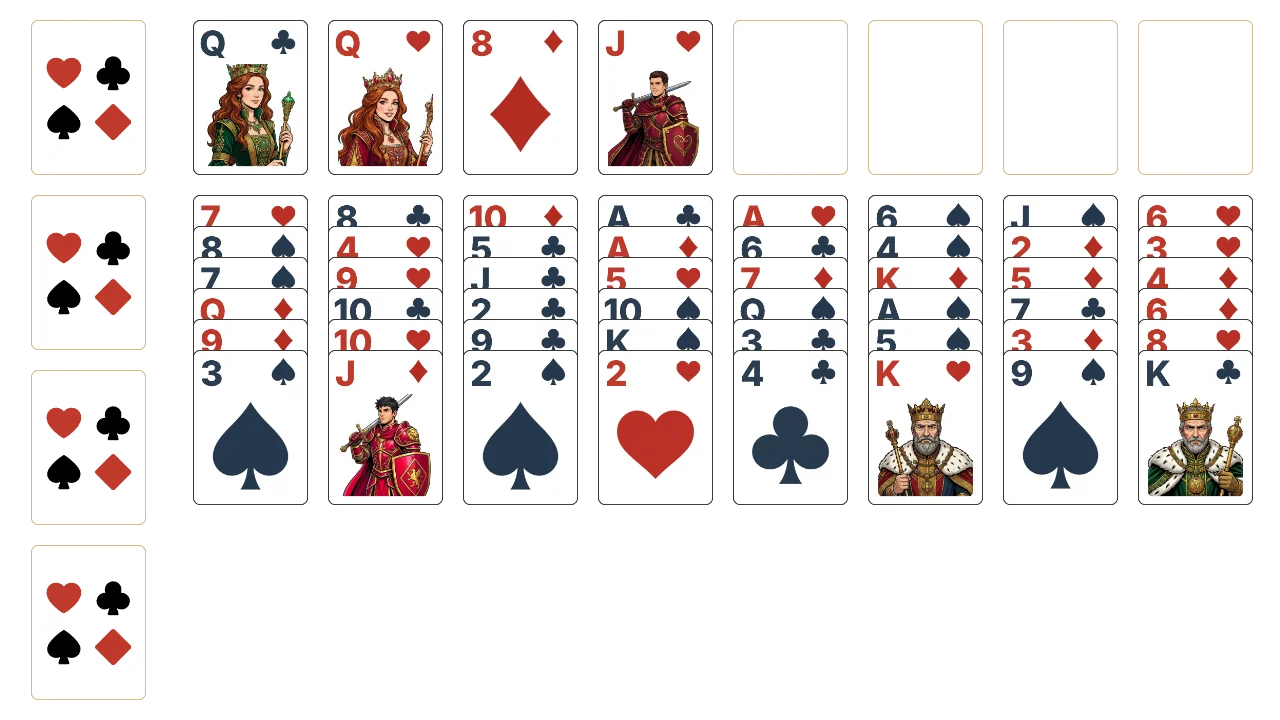
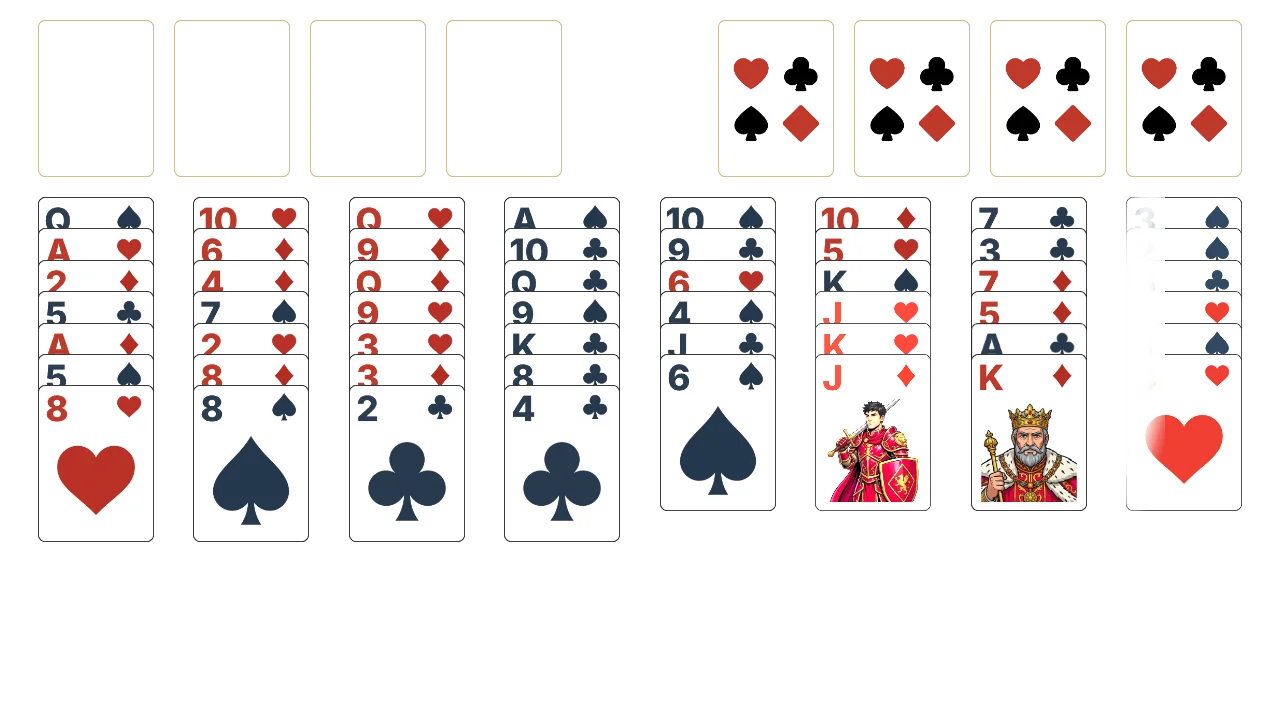
Shuffle a standard 52-card deck. Deal the cards face-up into 8 columns: the first four hold 7 cards each, the next four hold 6 cards — totalling 28 + 24 = 52 cards. Above the tableau, reserve four free cells (empty at the start) and four foundations (empty at the start, one per suit). Every card is visible from the very first move; there is no stock pile, no waste pile, and no redeal.
FreeCell 规则
- 52 张牌全部朝上,分成 8 列:4 列各 7 张,4 列各 6 张。
- 可以将任意一张牌临时放入 4 个自由格之一。
- 牌列按点数降序、颜色交替排列。
- 按花色从 A 到 K 依次叠放到基础堆。
- 整组移动取决于空格和空列的数量。
Win and loss conditions
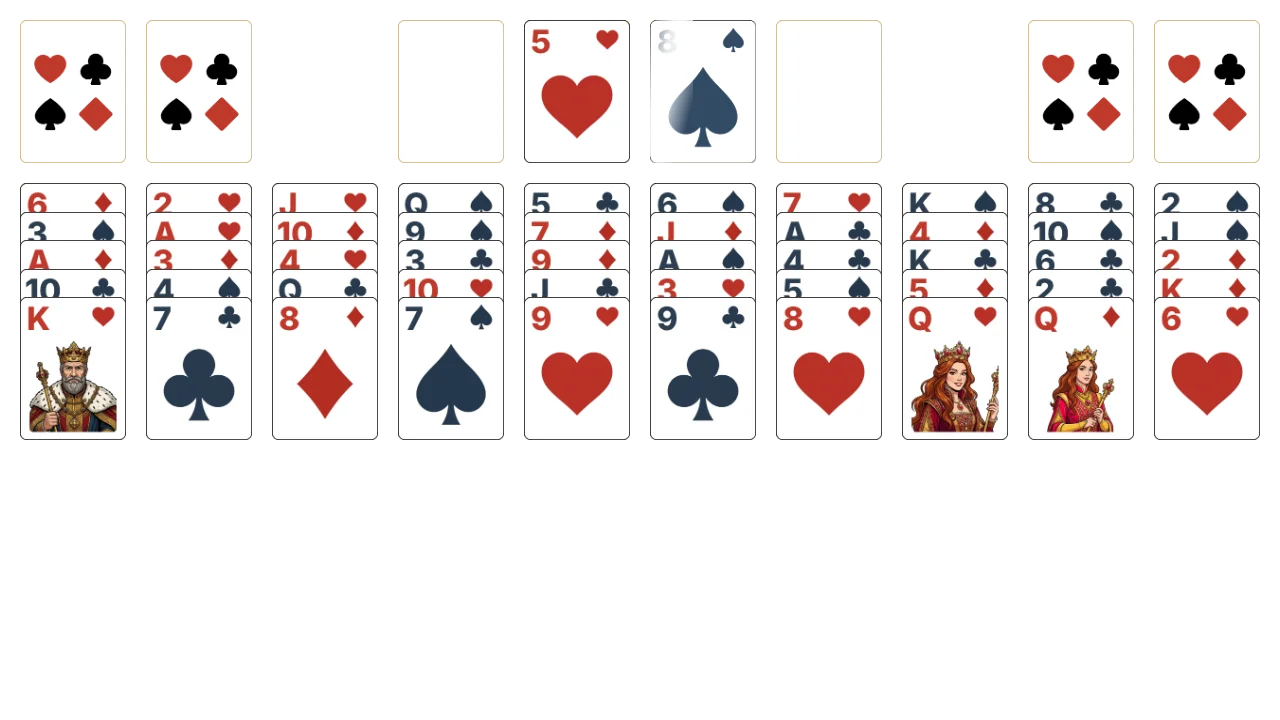
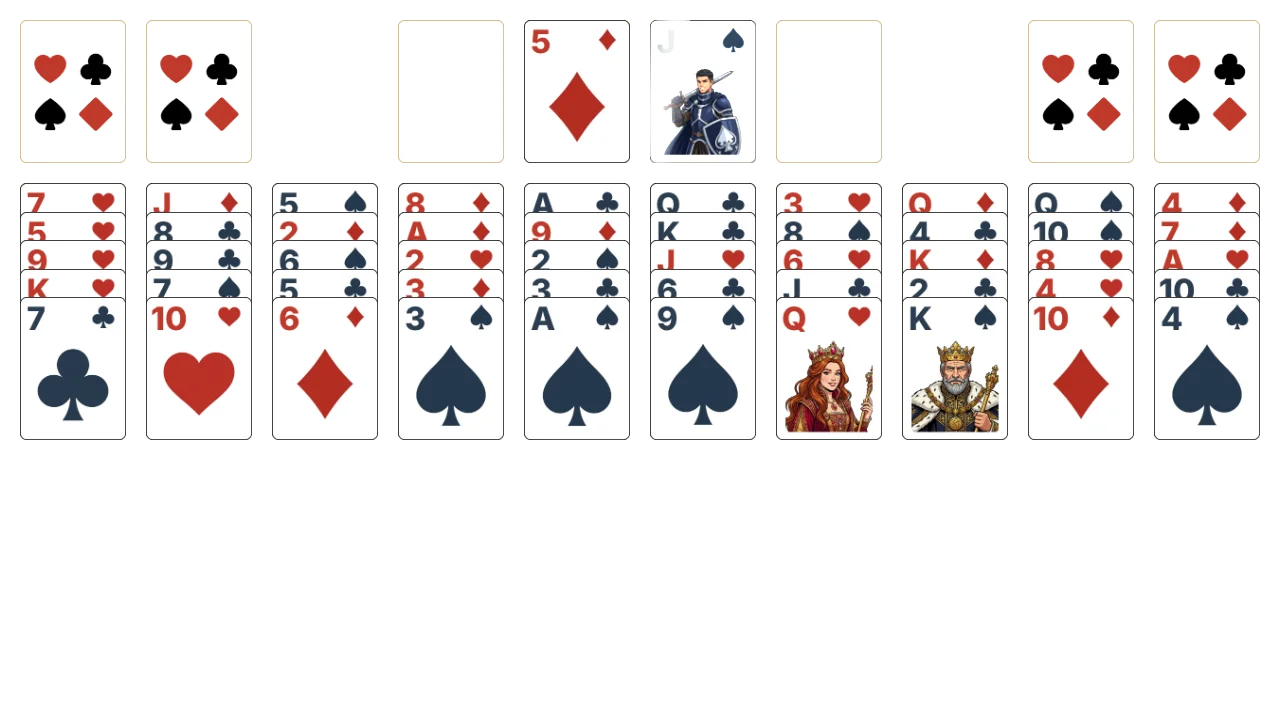
You win the moment all 52 cards have been built up onto the four foundations, Ace-2-3-…-King for each suit. You lose if no legal moves remain — every tableau card is blocked and the free cells are full. Solitaire Royal's undo button rewinds bad moves; you can also restart the deal or shuffle a new one. Deals are randomly shuffled and guaranteed solvable.
策略与技巧
- 逆向规划--先找 A 和 2,再计算释放它们的路径。
- 把自由格当作紧急储备:放进去的牌会限制你的操作空间。
- 空列能成倍提升移牌能力--尽量保持空列不被占用。
FreeCell was invented by Paul Alfille in 1978 on the PLATO computer system at the University of Illinois — a methodical rewrite of an older patience called "Baker's Game," switching from same-suit building to alternating-colour building. The game stayed obscure until Microsoft bundled it with Windows 95 (deals numbered 1 through 32,000), where it became a worldwide hit. Deal #11,982 is famously infamous: one of the very few official deals proven unsolvable.