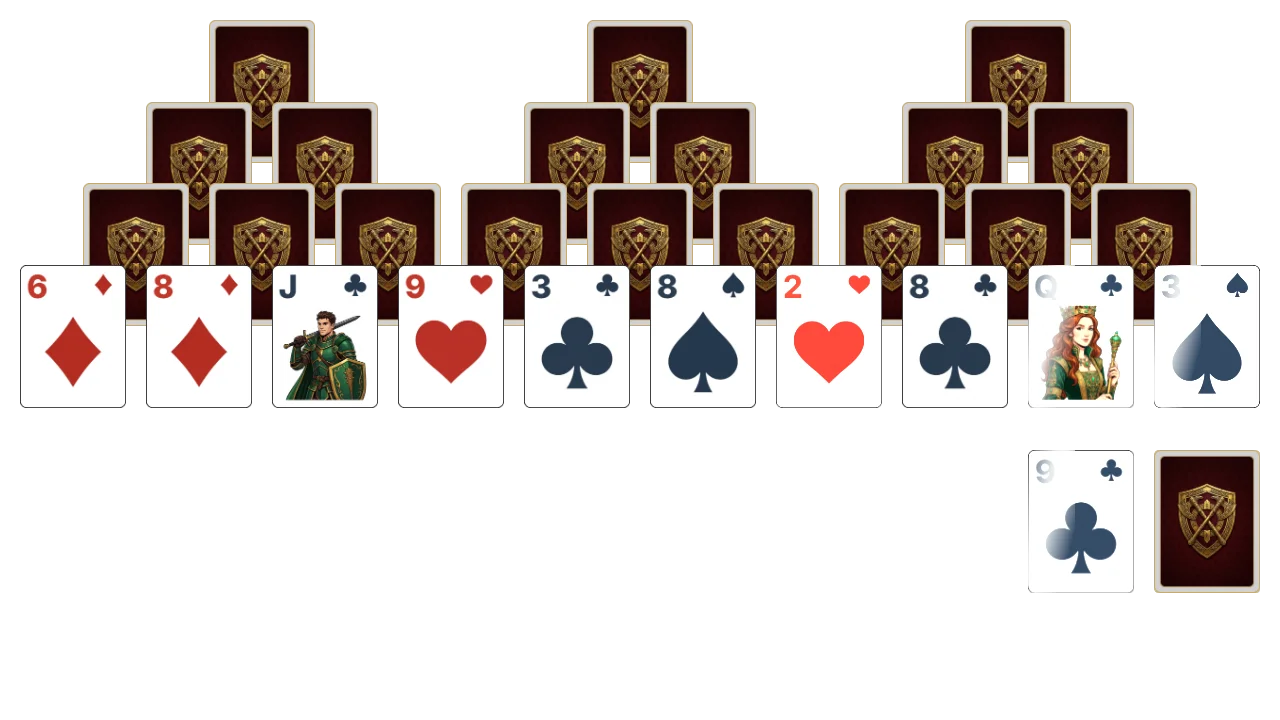
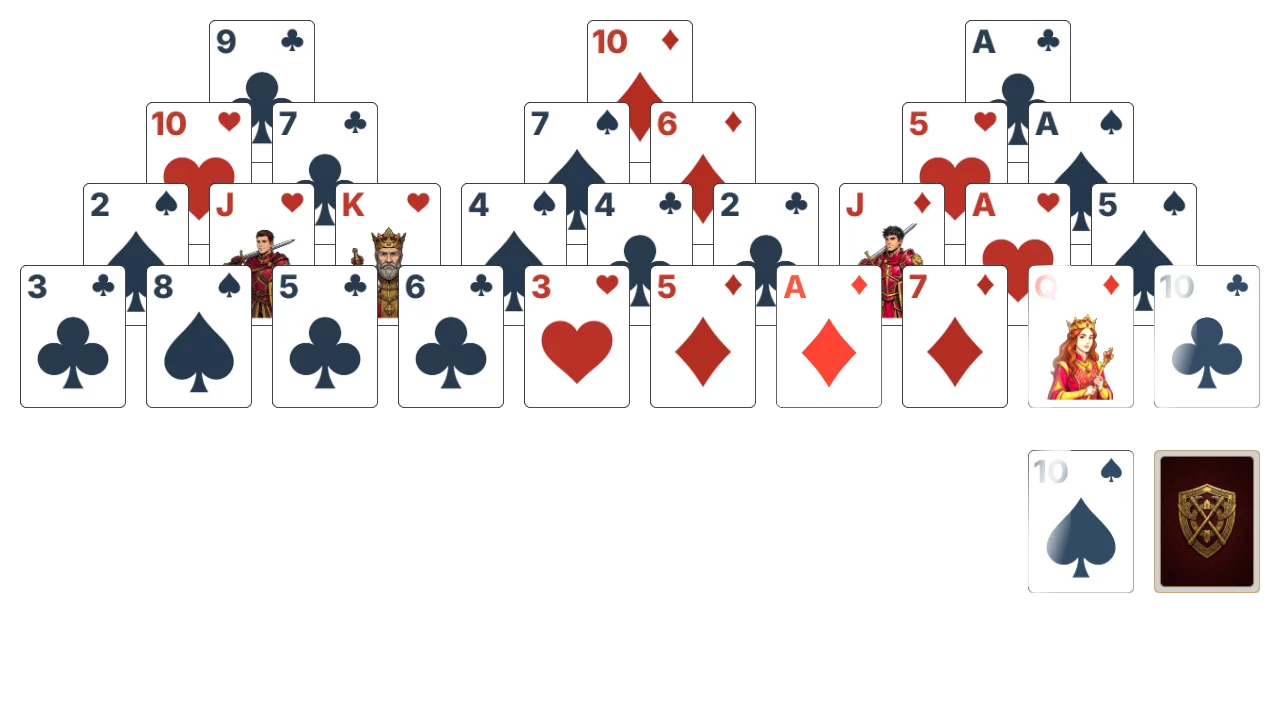
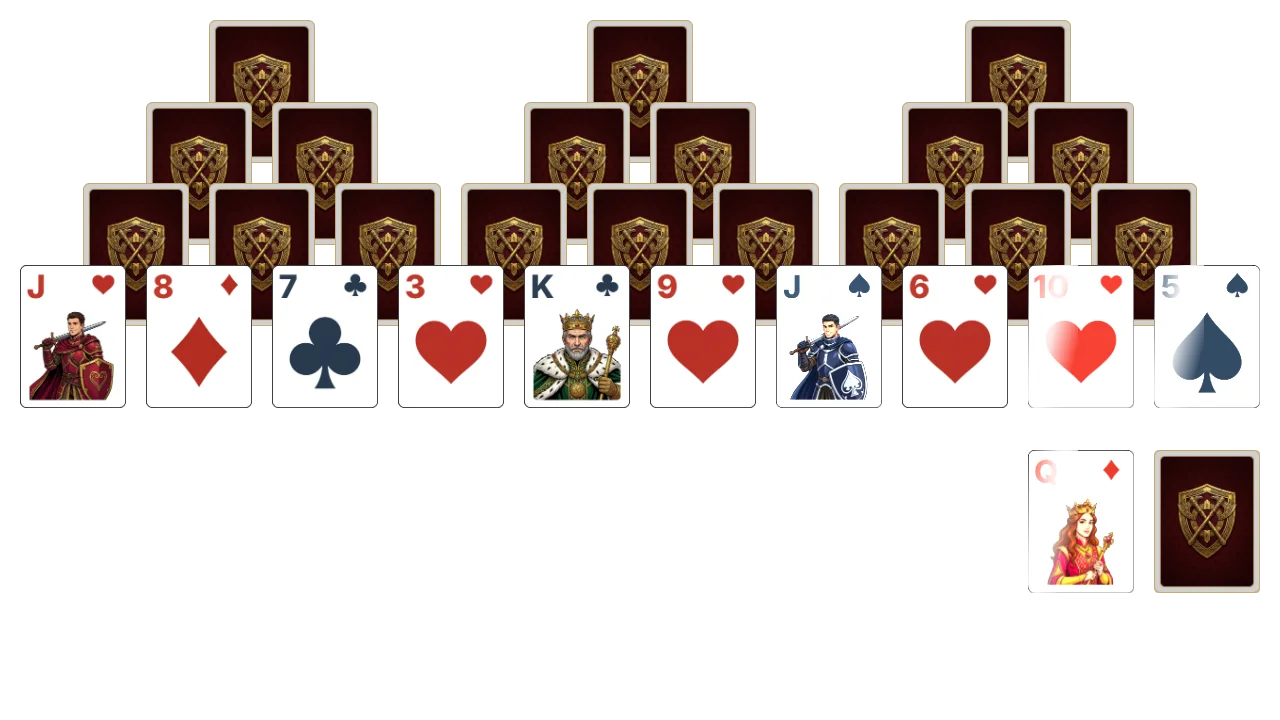
Goal of the game
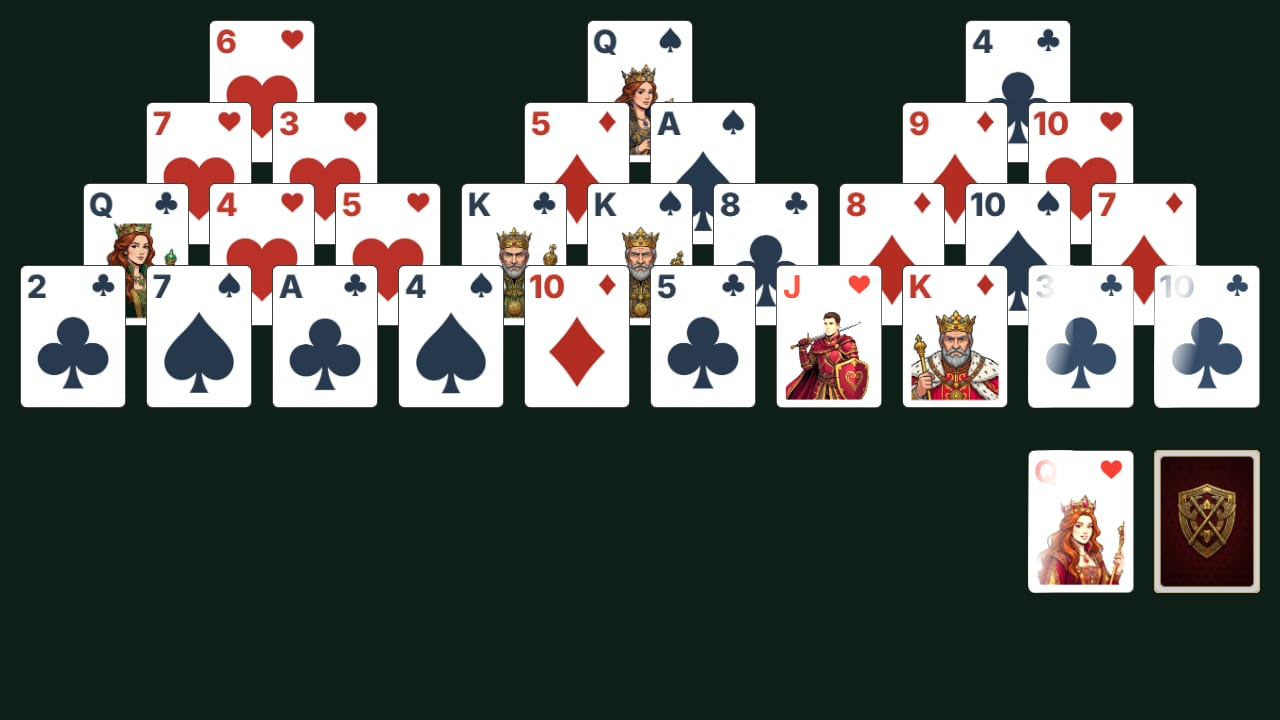
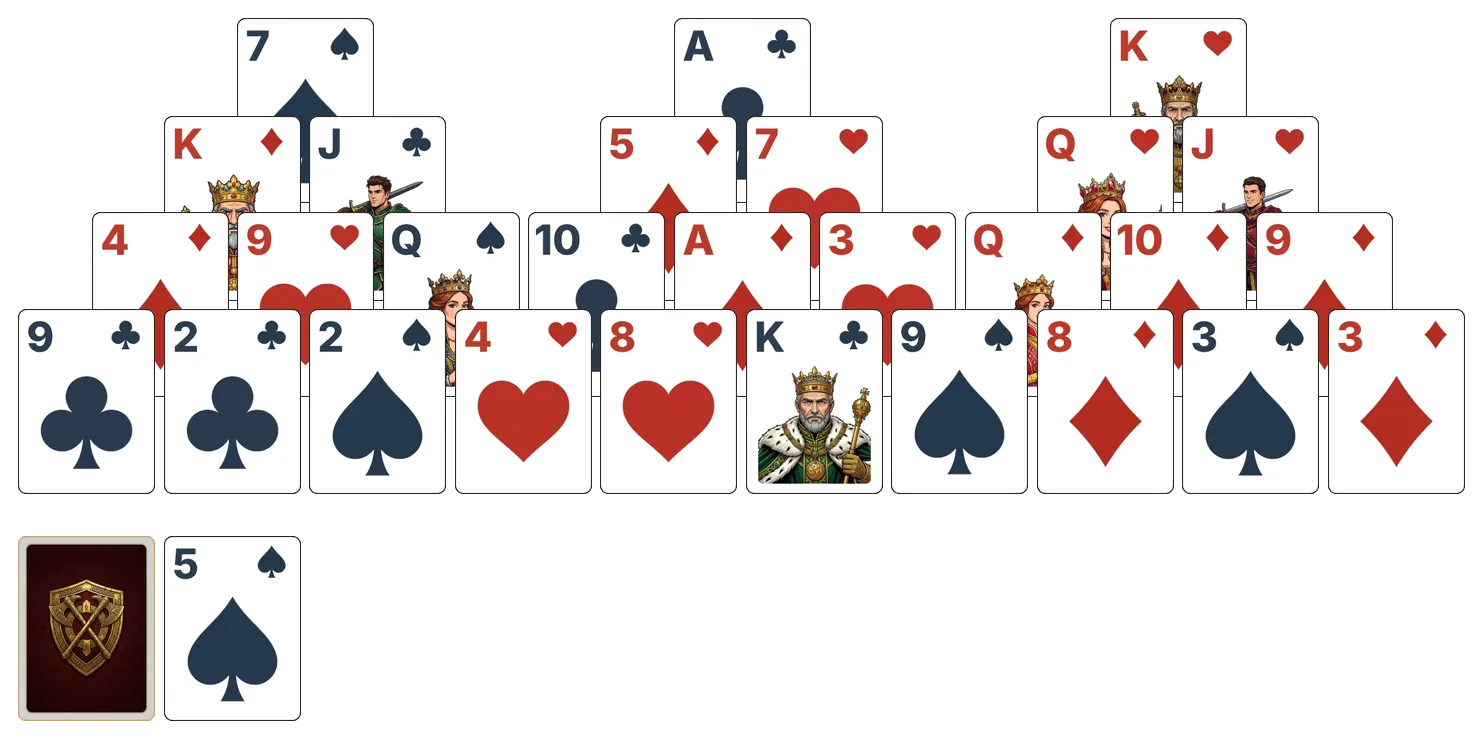
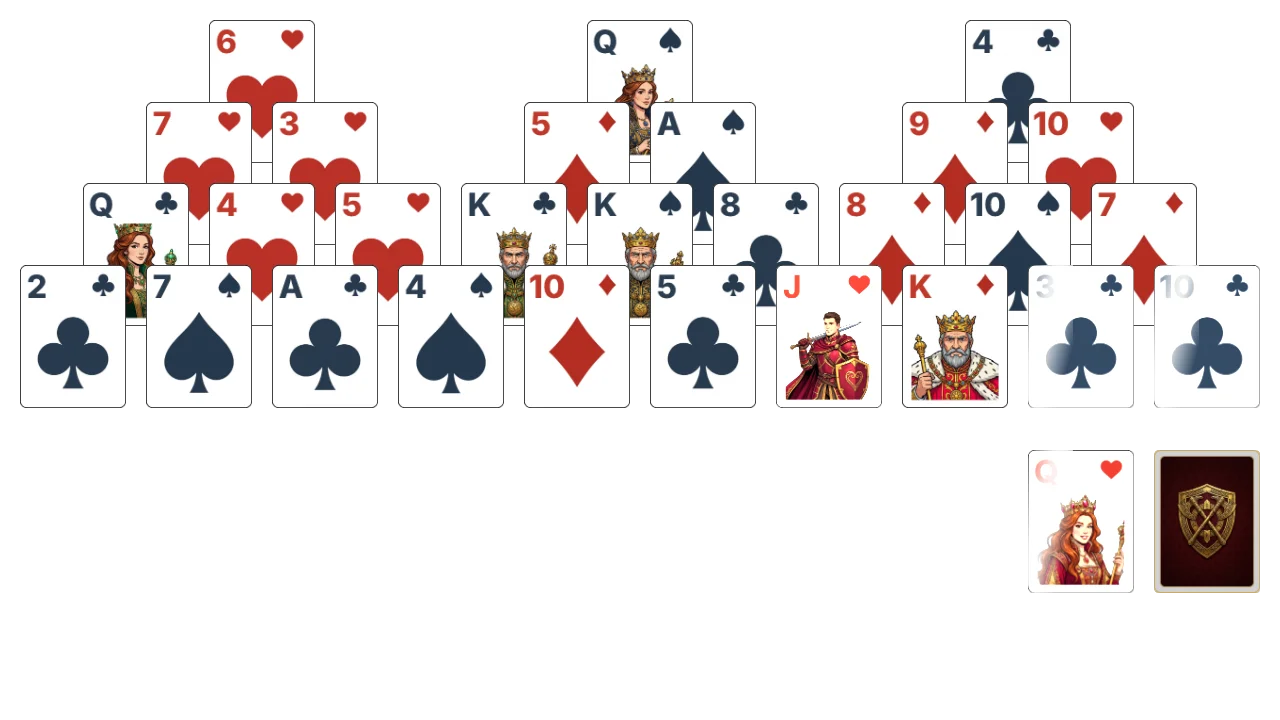
Clear all 28 cards from the three peaks by playing them onto a single waste pile. Each card played to the waste must be exactly one rank above or one rank below the current top of the waste, with suit ignored. The game is won when all three peaks are empty — the cards from the base row don't count for victory, only the three peaks do (in the classic ruleset).
Setup
Shuffle a standard 52-card deck. Deal 28 cards face-down into three overlapping peaks at the top of the layout, each peak shaped as a small pyramid: 1 card at the top, 2 below, 3 below those (6 cards total per peak × 3 peaks = 18 cards), plus a base row of 10 face-up cards beneath the peaks that connect all three. The remaining 24 cards form the stock pile, dealt one card at a time onto a face-up waste pile.
Tri Peaks 规则
- 28 张牌排成三座 4 行金字塔的交叠布局,剩余 24 张为抽牌堆。
- 被上方两张牌覆盖的牌无法使用。
- 移除点数比废牌堆顶牌高 1 或低 1 的牌(不限花色)。
- 仅看点数差是否为 1,花色无关。
- 清空所有牌或抽牌堆用完时游戏结束。
Win and loss conditions
You win when the three peaks are completely cleared. You lose when the stock is exhausted, no exposed card matches the waste's top rank ±1, and no more moves are possible. Score is calculated from chain length: a chain of N consecutive plays earns 1+2+3+...+N points (so a 10-card chain is worth 55 points vs ten isolated plays at 1 point each = 10). Solitaire Royal's undo button lets you backtrack costly chain breaks; you can also restart the deal or shuffle a new one.
策略与技巧
- 保持连续消除的连击越长,分数增长越快。
- 翻抽牌堆之前,先处理所有当前可消除的牌。
- 找出哪张牌遮挡了最多其他牌,优先规划消除顺序。
Tri Peaks was designed in 1989 by Robert Hogue at Microsoft (according to Hogue's own accounts) as a successor to Pyramid solitaire, intended to offer faster pacing and higher visual reward. It was first widely distributed in Microsoft Entertainment Pack 4 in 1991 and later included in successive Windows releases. The rolling-rank-by-one mechanic was directly inherited from Golf solitaire (1930s origin), but the three-peak layout and chain-scoring system are Hogue's contributions — and they made Tri Peaks one of the most-played solitaire games of the 1990s and 2000s, second only to Klondike and FreeCell.