Goal of the game
Move all 104 cards (two complete decks) onto the eight foundations by suit. Four foundations build up from Ace to King; four foundations build down from King to Ace. The game is won when the up-built and down-built foundations of the same suit meet in the middle — typically with a 7 or 8 as the final card placed.
Setup
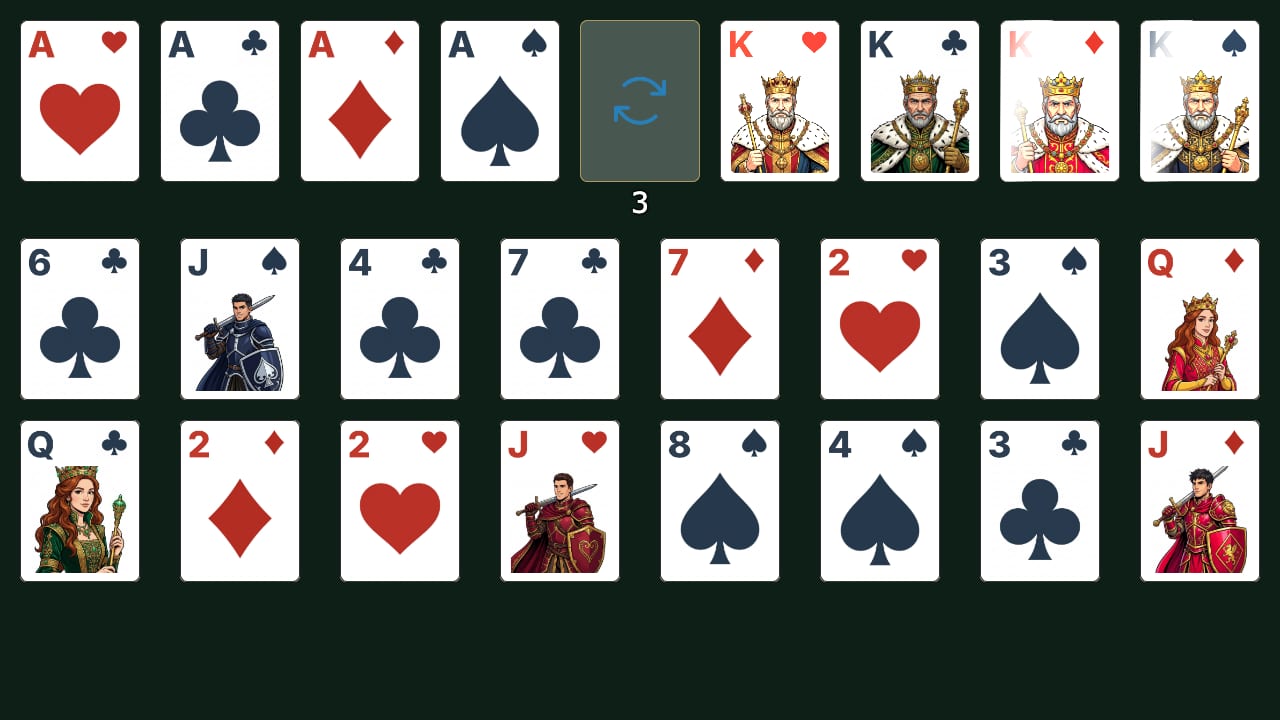
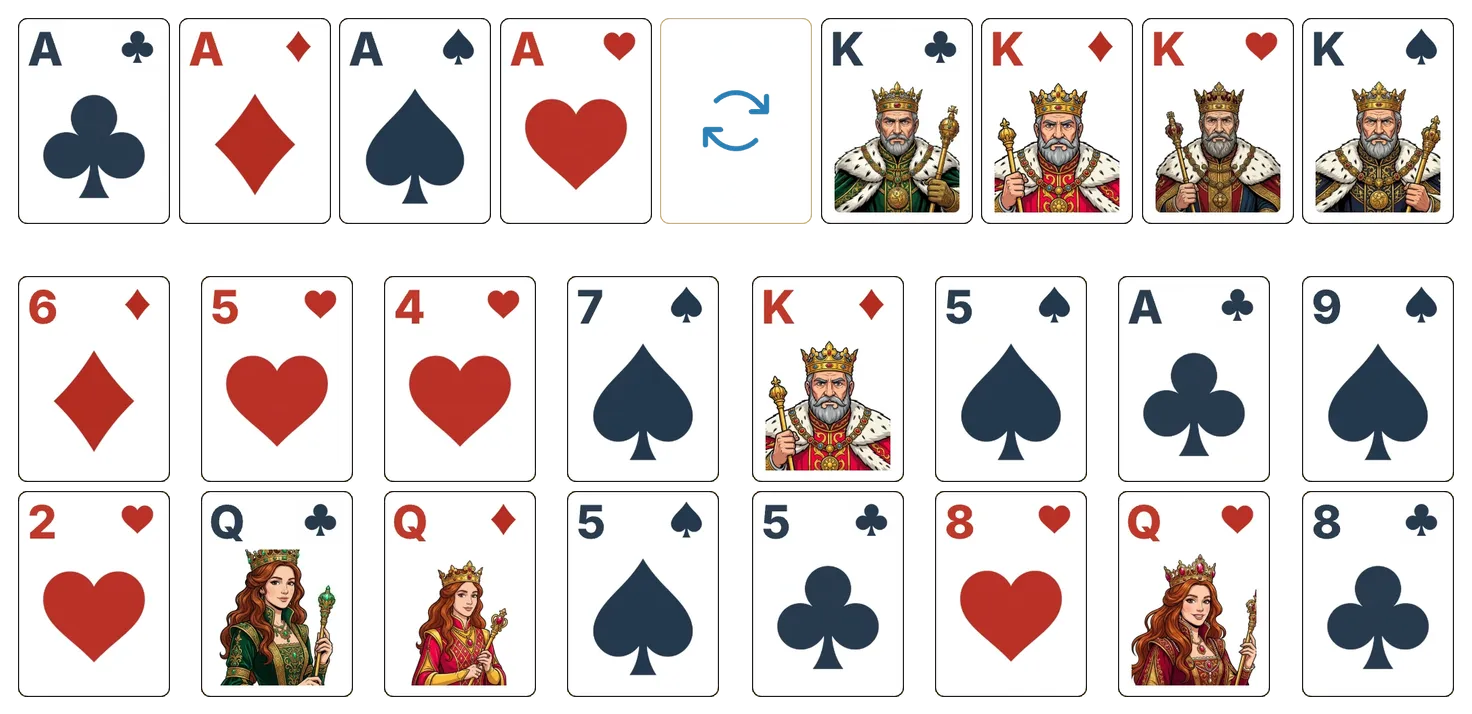
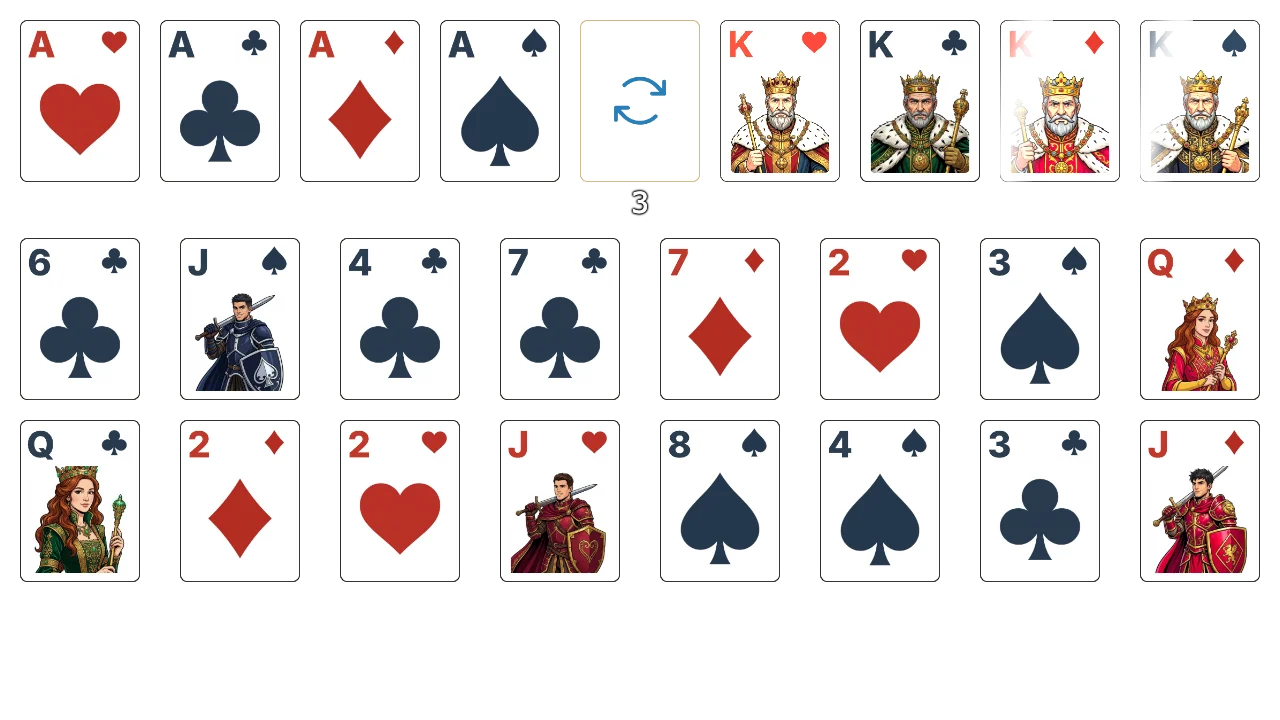
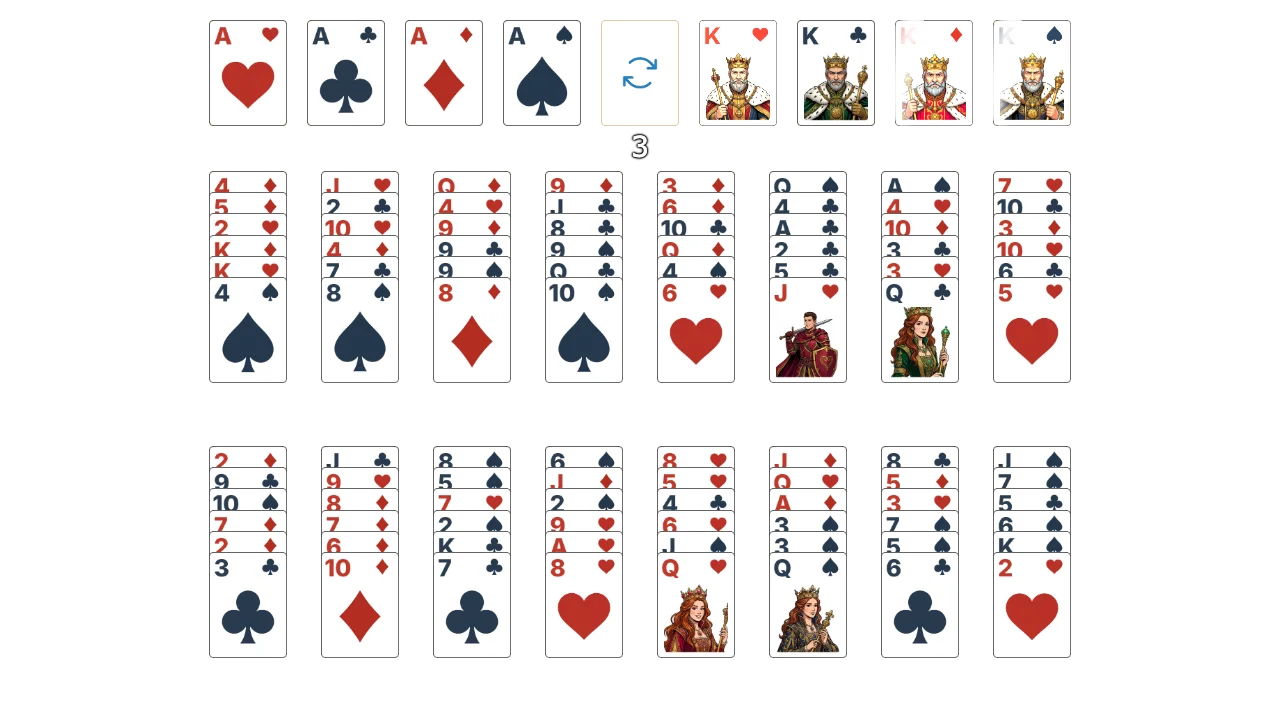
Shuffle two standard 52-card decks together (104 cards). Place one Ace and one King of each suit as the eight foundation piles in the centre — four Aces below, four Kings above (or vice versa, layout varies). Deal the remaining 96 cards into 16 reserve piles of 6 cards each, arranged in a crescent (half-moon) around the foundations. Only the top card of each reserve pile is in play.
Regras do Crescent
- Coloque 4 Ases e 4 Reis como bases.
- Distribua 16 pilhas de reserva de 6 cartas cada em formato de meia-lua.
- Monte as bases em ordem crescente dos Ases e decrescente dos Reis, por naipe.
- Mova cartas avulsas entre pilhas de reserva por naipe, em qualquer direção.
- Três redistribuições: cada uma leva a carta do fundo de cada pilha para o topo.
Win and loss conditions
You win when both halves of every suit's foundations have built towards each other and exhausted all cards — typically meeting at the 7 and 8 of each suit. You lose when no legal moves remain and all redeals have been used. The Solitaire Royal undo button lets you rewind costly moves; you can also restart the deal or shuffle a new one. Deals are randomly shuffled and tuned to be solvable.
Estratégia e dicas
- Aproveite a montagem bidirecional - às vezes devolver uma carta à base decrescente abre a reserva certa.
- Escolha bem o momento das redistribuições: cada uma embaralha a carta do fundo para cima, mudando radicalmente o tabuleiro.
- O modo Relaxed permite redistribuições extras - use ao aprender.
Crescent's distinctive half-moon layout dates to late-19th-century European patience books, where its decorative geometry was as much the point as the gameplay. The bidirectional foundations and three-redeal mechanic were standardised in mid-20th-century English solitaire collections, and the game has remained a fan favourite among two-deck enthusiasts for the unusual rhythm — building towards the middle rather than racing from Ace to King in one direction.