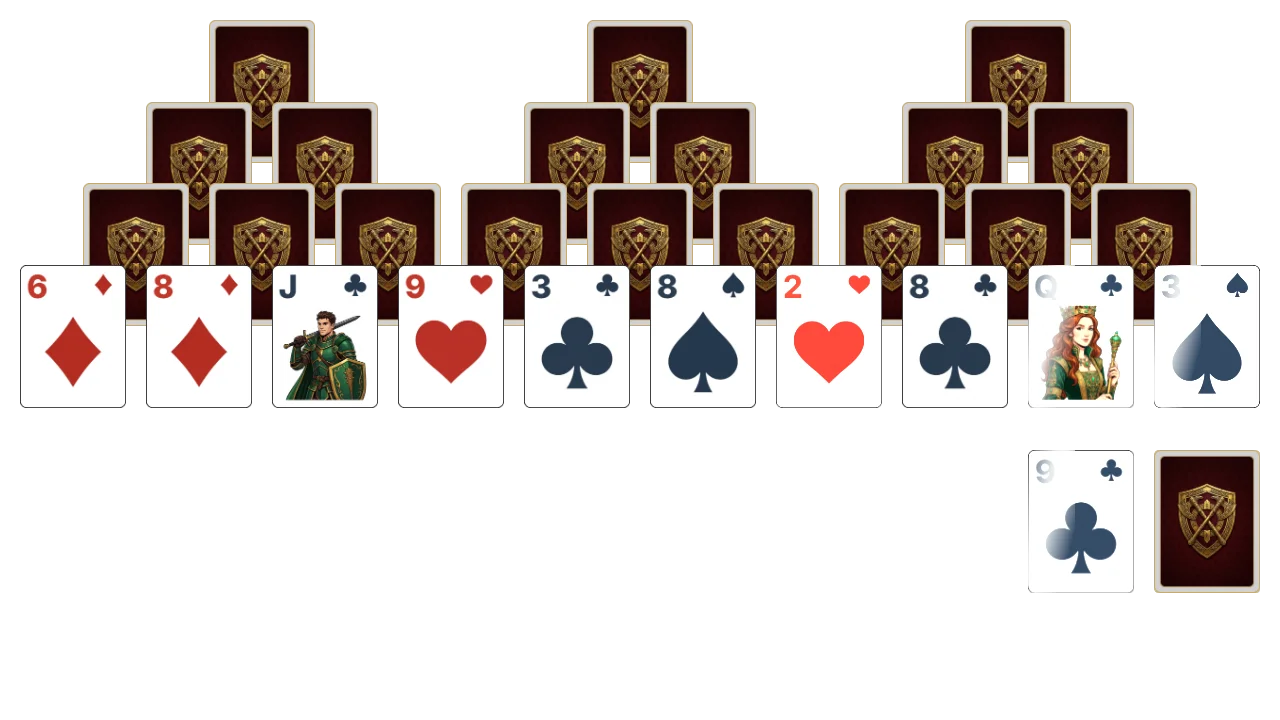
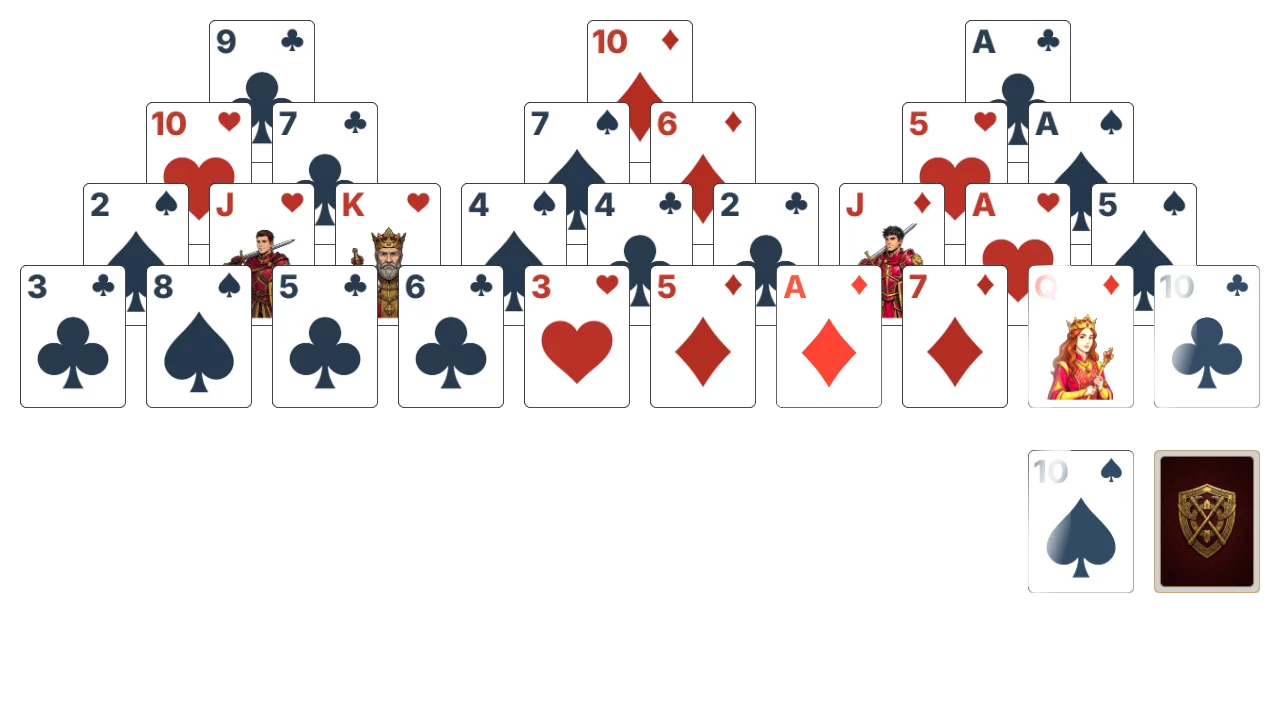
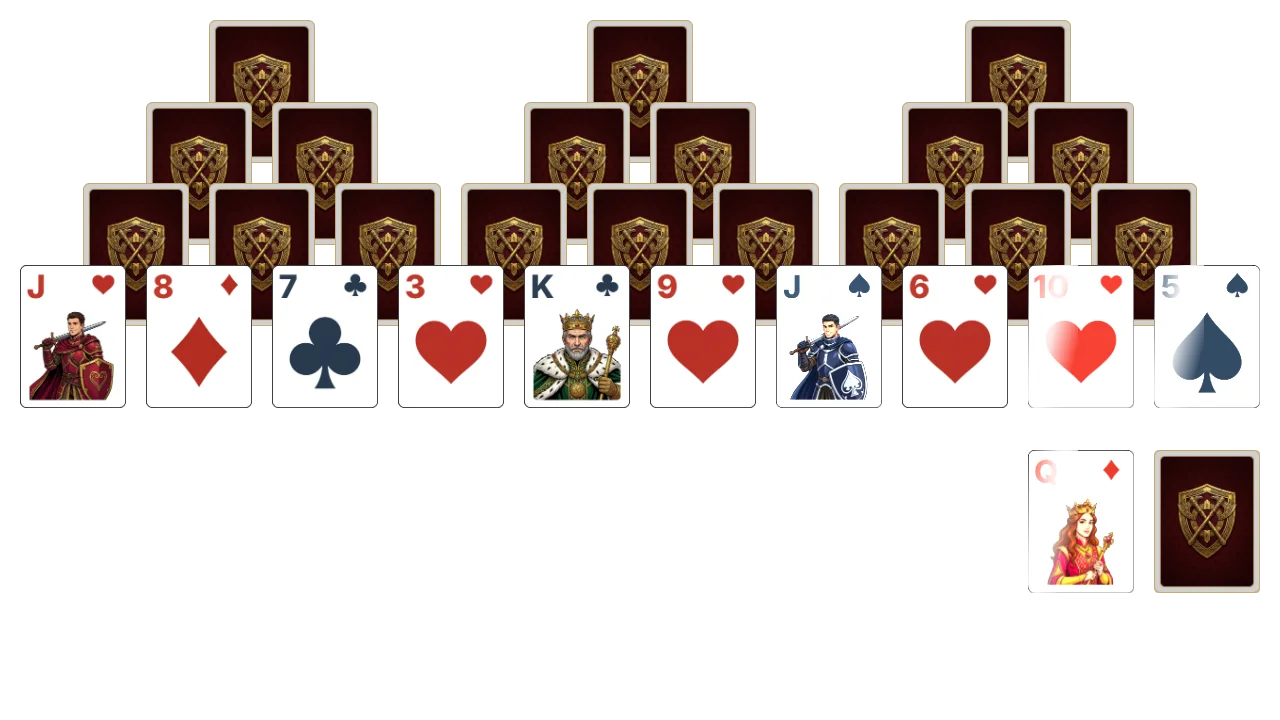
Goal of the game
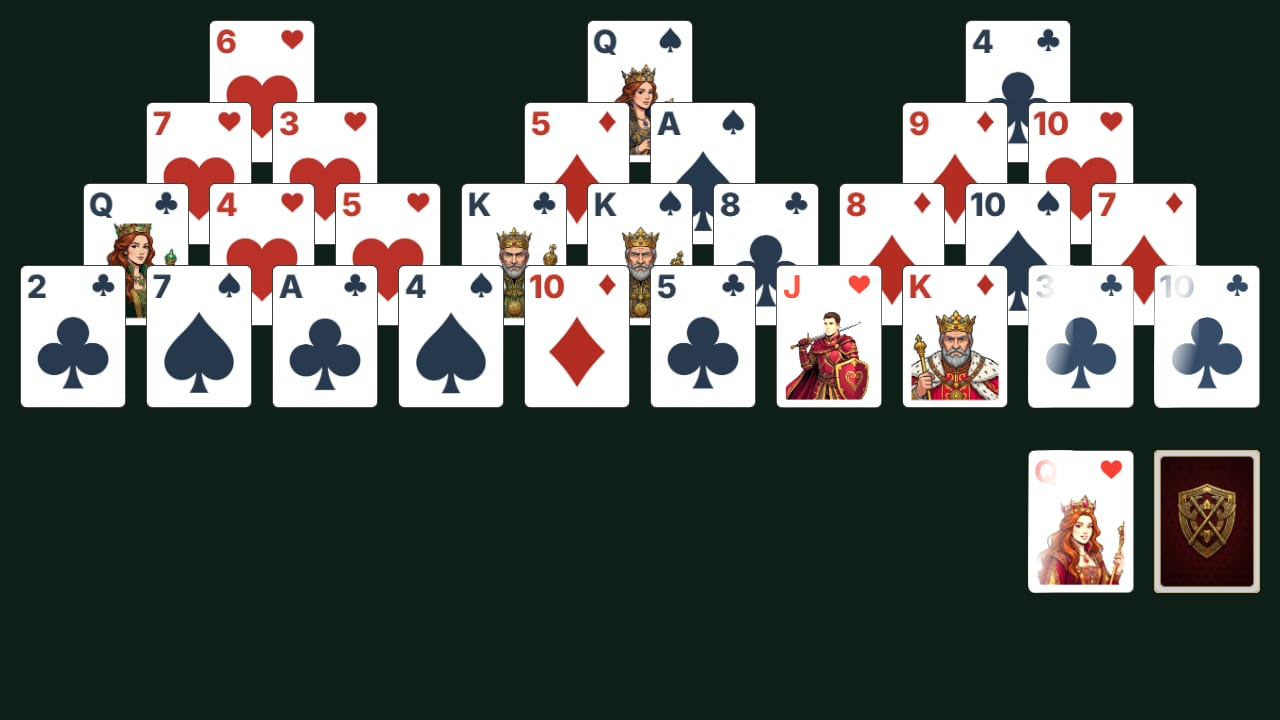
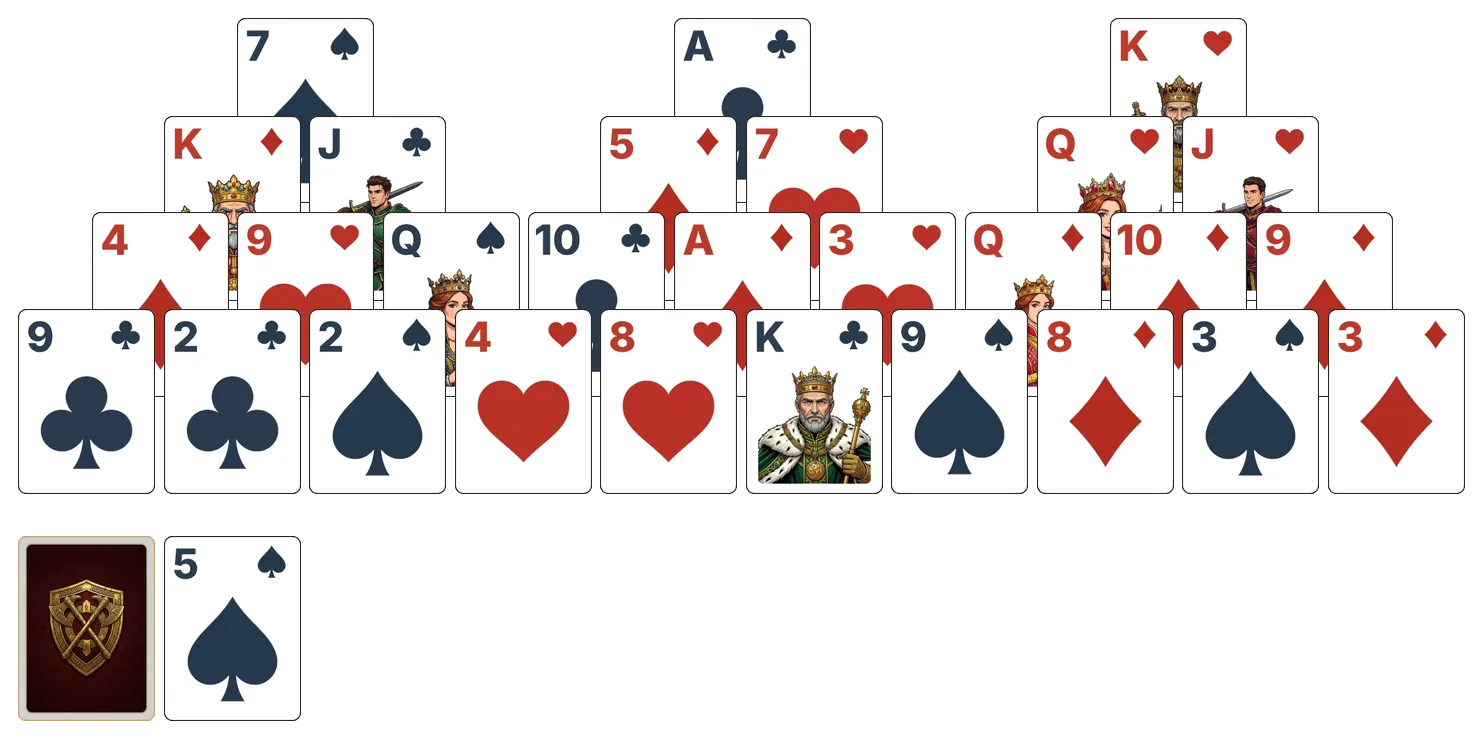
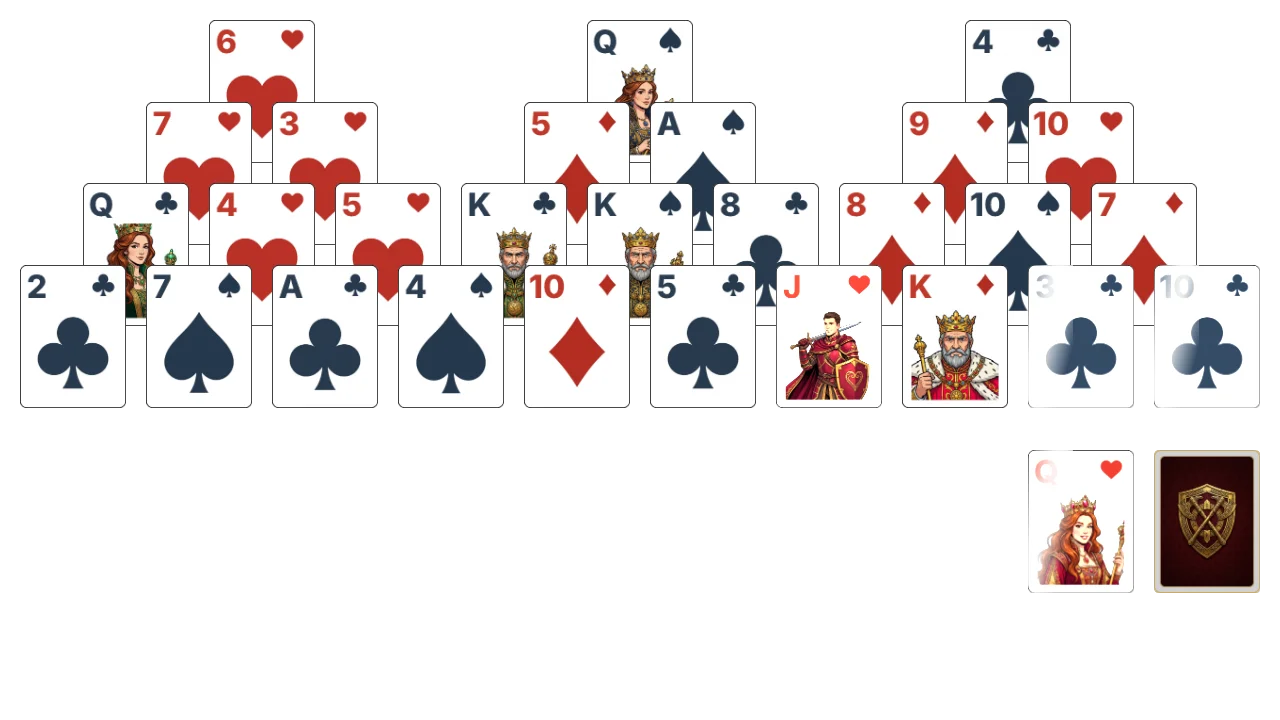
Clear all 28 cards from the three peaks by playing them onto a single waste pile. Each card played to the waste must be exactly one rank above or one rank below the current top of the waste, with suit ignored. The game is won when all three peaks are empty — the cards from the base row don't count for victory, only the three peaks do (in the classic ruleset).
Setup
Shuffle a standard 52-card deck. Deal 28 cards face-down into three overlapping peaks at the top of the layout, each peak shaped as a small pyramid: 1 card at the top, 2 below, 3 below those (6 cards total per peak × 3 peaks = 18 cards), plus a base row of 10 face-up cards beneath the peaks that connect all three. The remaining 24 cards form the stock pile, dealt one card at a time onto a face-up waste pile.
Regras do Tri Peaks
- Distribua 28 cartas em três picos de 6 cartas cada, com uma fileira base de 10 cartas viradas para cima.
- Mova qualquer carta exposta do pico para o descarte se o seu valor for um acima ou um abaixo do topo (naipe não importa).
- Ases conectam a Reis e vice-versa - a sequência é circular.
- Sem movimentos? Vire a próxima carta do monte para o descarte.
- Limpe os três picos para vencer.
Win and loss conditions
You win when the three peaks are completely cleared. You lose when the stock is exhausted, no exposed card matches the waste's top rank ±1, and no more moves are possible. Score is calculated from chain length: a chain of N consecutive plays earns 1+2+3+...+N points (so a 10-card chain is worth 55 points vs ten isolated plays at 1 point each = 10). Solitaire Royal's undo button lets you backtrack costly chain breaks; you can also restart the deal or shuffle a new one.
Estratégia e dicas
- Busque a cadeia mais longa possível antes de tocar no monte - cada carta que você pula em uma cadeia são pontos perdidos.
- Prefira cartas que liberam dois filhos ao mesmo tempo em vez de capturas isoladas.
- Não prenda uma carta "ponte" importante sob cartas que você ainda precisa.
Tri Peaks was designed in 1989 by Robert Hogue at Microsoft (according to Hogue's own accounts) as a successor to Pyramid solitaire, intended to offer faster pacing and higher visual reward. It was first widely distributed in Microsoft Entertainment Pack 4 in 1991 and later included in successive Windows releases. The rolling-rank-by-one mechanic was directly inherited from Golf solitaire (1930s origin), but the three-peak layout and chain-scoring system are Hogue's contributions — and they made Tri Peaks one of the most-played solitaire games of the 1990s and 2000s, second only to Klondike and FreeCell.